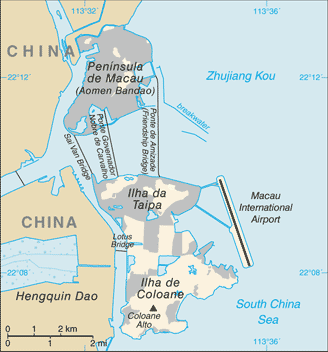
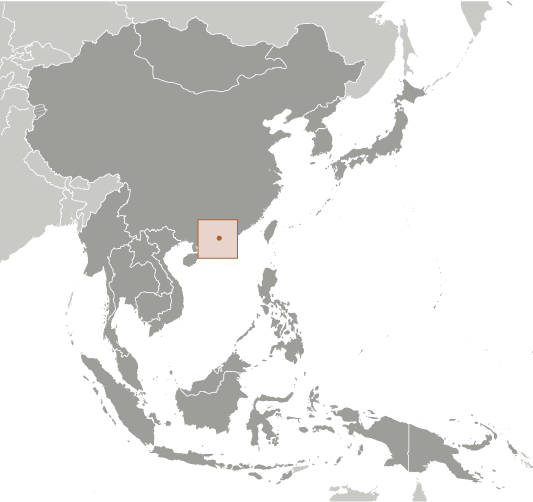
Learning about Macau's geography is helpful because it shows K-12 students how a tiny peninsula and islands can become one of the most densely populated and wealthy places on Earth. Macau sits on the southern coast of China, across the Pearl River Delta from Hong Kong. It includes the Macau Peninsula and the islands of Taipa and Coloane, now connected by reclaimed land called Cotai. Because it has almost no flat land, much of the city is built on land reclaimed from the sea, and tall buildings pack tightly together.
Studying Macau builds key geographic skills. Students can explore how limited space forces creative solutions like land reclamation and high-rise construction. They can also learn how Macau's location near major shipping routes helped it become a global center for trade and tourism. Macau was a Portuguese colony for over four hundred years, making it a rare blend of Chinese and European culture. Today it is a special administrative region of China, like Hong Kong.
The country's cultural geography is rich, seen in its Portuguese-style buildings, Cantonese language, and famous food like egg tarts and pork chop buns. For young learners, Macau is memorable because of its casinos, old streets, and mix of cultures. Studying it builds map skills, cultural awareness, and understanding of how geography shapes a place with little land but global influence.
|