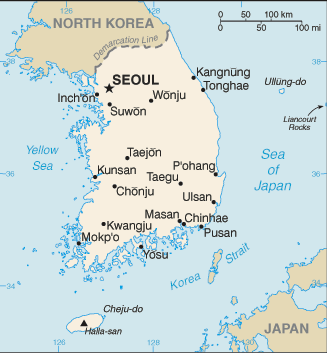
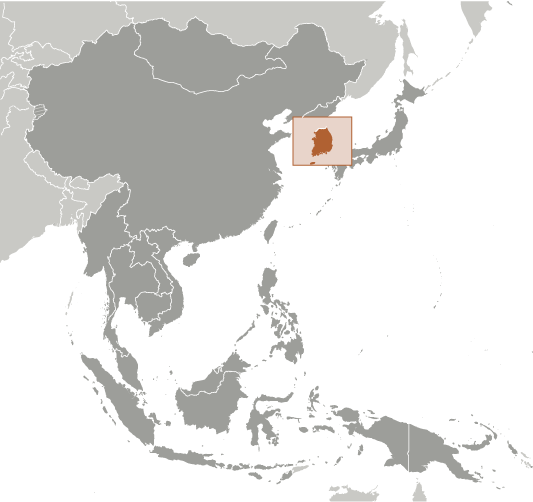
Learning about South Korea's geography is helpful because it shows K-12 students how a small, mountainous country can become a global economic and cultural power. South Korea sits on the southern half of the Korean Peninsula in East Asia, bordered by North Korea to the north and surrounded by the Yellow Sea and the Sea of Japan. Mountains cover about seventy percent of the country, so most people live in coastal plains and river valleys. The Han River flows through Seoul, the capital and one of the world's largest cities.
Studying South Korea builds key geographic skills. Students can explore how limited farmland and few natural resources pushed the country to focus on education, technology, and manufacturing. They can also learn how South Korea grew from poverty after the Korean War into a leader in electronics, cars, and shipbuilding. Its location between China and Japan has made it a crossroads for trade and culture for centuries.
The country's cultural geography is rich, with traditions like kimchi, hanbok clothing, and K-pop music known worldwide. For young learners, South Korea is memorable because of its mountains, tech cities, and vibrant pop culture. Studying it builds map skills, cultural awareness, and understanding of how geography shapes a nation's economy and identity.
|