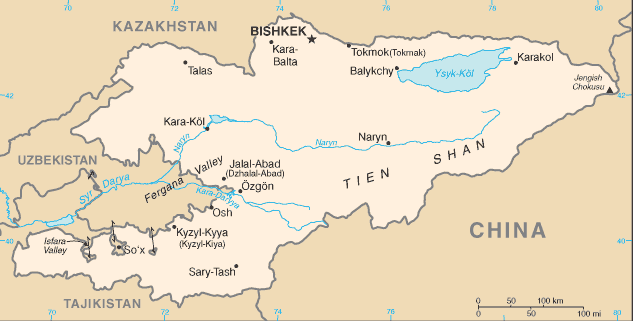
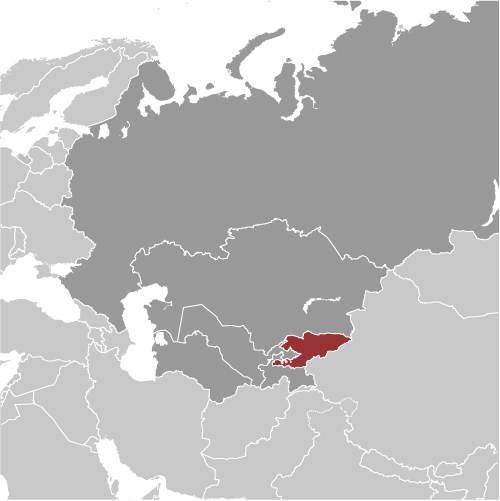
Learning about Kyrgyzstan's geography is helpful because it shows K-12 students how a small, mountainous country can be defined by its peaks, valleys, and nomadic traditions. Kyrgyzstan sits in Central Asia, bordered by Kazakhstan, China, Tajikistan, and Uzbekistan. It has no coastline, so trade depends on its neighbors. More than ninety percent of the country is mountainous, dominated by the Tian Shan range. This creates dramatic landscapes of snow-capped peaks, glaciers, and deep valleys. The country's name means "land of forty tribes," reflecting its diverse heritage.
Studying Kyrgyzstan builds key geographic skills. Students can explore how high mountains create cold climates and how snowmelt feeds rivers that support farming in valleys. They can also learn how the country's terrain limits transportation and settlement, and how gold mining and hydropower connect it to global markets. Issyk-Kul, one of the world's largest mountain lakes, is a striking geographic feature that supports tourism and wildlife.
The country's cultural geography is rich, with Kyrgyz traditions like yurts, horseback games, and the epic poem Manas. For young learners, Kyrgyzstan is memorable because of its mountains, lakes, and nomadic culture. Studying it builds map skills, cultural awareness, and understanding of how geography shapes a nation's identity and way of life in Central Asia.
|