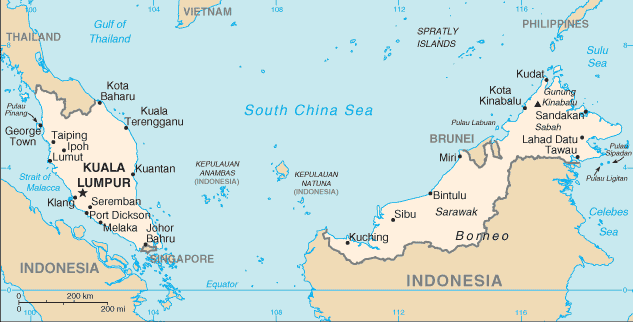
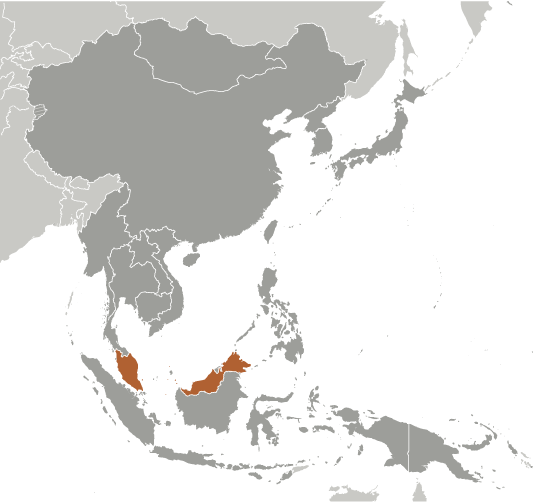
Learning about Malaysia's geography is beneficial because it shows K-12 students how a country split between a peninsula and an island can thrive through trade and diversity. Malaysia sits in Southeast Asia, divided into two main parts: Peninsular Malaysia, which borders Thailand and Singapore, and East Malaysia, which shares the island of Borneo with Indonesia and Brunei. The country has tropical rainforests, mountains, and long coastlines. The Strait of Malacca, one of the world's busiest shipping routes, runs along its west coast.
Studying Malaysia builds key geographic skills. Students can explore how monsoon rains support farming of rice, palm oil, and rubber. They can also learn how Malaysia's location makes it a hub for trade and manufacturing, especially electronics. The country is rich in biodiversity, home to orangutans, tigers, and Rafflesia, the world's largest flower.
The country's cultural geography is rich, with Malay, Chinese, Indian, and Indigenous influences shaping its languages, food, and festivals. For young learners, Malaysia is memorable because of its rainforests, twin towers, and diverse culture. Studying it builds map skills, cultural awareness, and understanding of how geography shapes a nation's economy and identity in Southeast Asia.
|