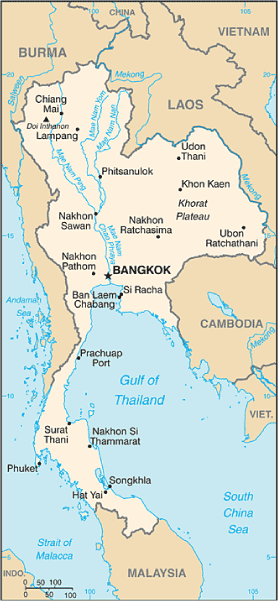
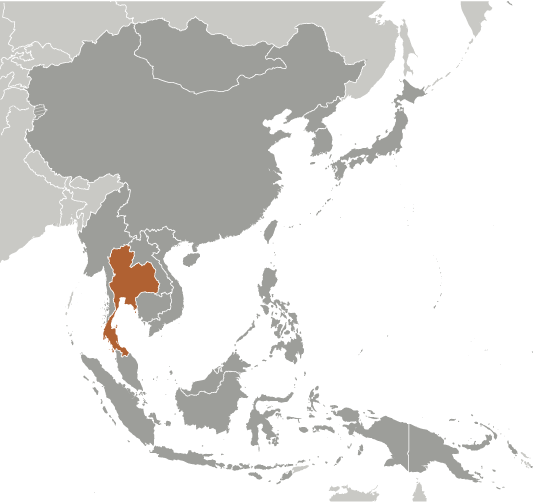
Learning about Thailand's geography is beneficial because it shows K-12 students how location, rivers, and climate shape a nation's culture and economy. Thailand sits in Southeast Asia, bordered by Myanmar, Laos, Cambodia, and Malaysia, with coastlines on the Gulf of Thailand and the Andaman Sea. The Chao Phraya River flows through the fertile central plain, where rice farming thrives and where Bangkok, the capital, is located. Mountains and forests cover the north and west, while the south stretches into a narrow peninsula with tropical beaches.
Studying Thailand builds key geographic skills. Students can explore how monsoon rains support rice farming, which is central to Thai life and exports. They can also learn how the country's location made it a trading crossroads and how tourism, fishing, and electronics connect it to global markets. Thailand's varied landscapes support wildlife like elephants and tigers in national parks.
The country's cultural geography is rich, with Buddhism, unique festivals, and famous cuisine. For young learners, Thailand is memorable because of its temples, floating markets, and beaches. Studying it builds map skills, cultural awareness, and understanding of how geography shapes a nation's identity and economy in Southeast Asia.
|