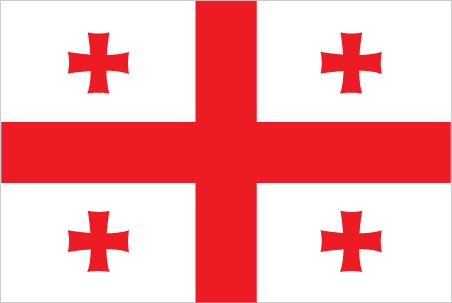
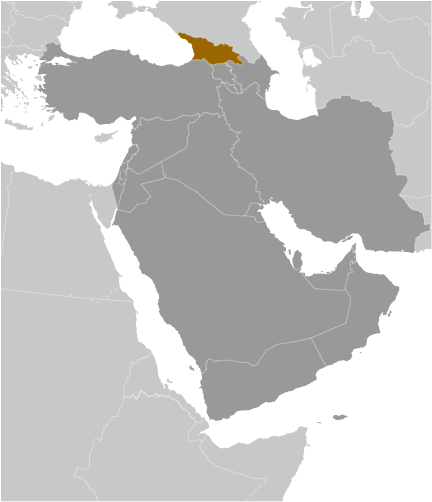
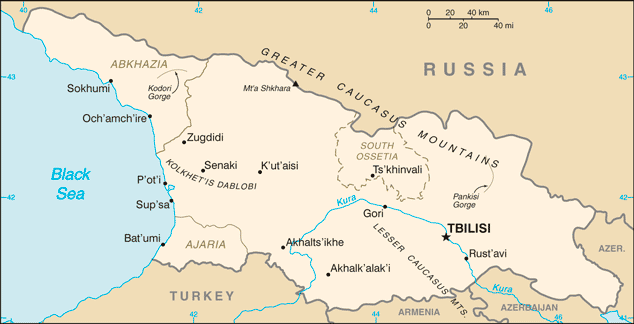
Teaching about Georgia is beneficial because it shows K-12 students how a small country at the crossroads of Europe and Asia can be shaped by mountains, the Black Sea, and ancient traditions. Georgia sits in the South Caucasus, bordered by Russia, Azerbaijan, Armenia, and Turkey, with a coastline on the Black Sea. The Greater Caucasus mountains run along its northern border, and the Lesser Caucasus lie in the south. Between them are fertile valleys and the Kura River, which supports farming.
Studying Georgia builds key geographic skills. Students can explore how mountains block cold air and create mild, wet climates along the Black Sea coast, where tea and citrus grow. They can also learn how the country's location made it a stop on the Silk Road, connecting Europe and Asia for centuries. Georgia's rivers provide hydropower, and its varied terrain supports rich biodiversity.
The country's cultural geography is rich, with its own alphabet, ancient wine-making traditions, and distinctive polyphonic singing. For young learners, Georgia is memorable because of its snowy peaks, Black Sea beaches, and warm hospitality. Studying it builds map skills, cultural awareness, and understanding of how geography shapes a nation's identity at the meeting point of continents.
|