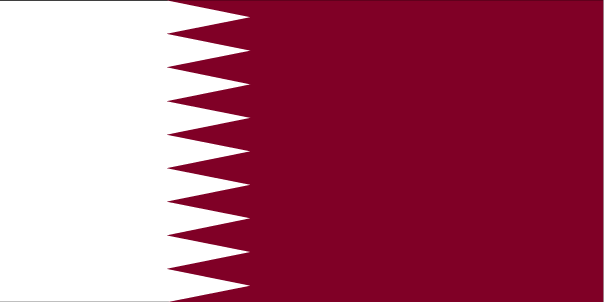
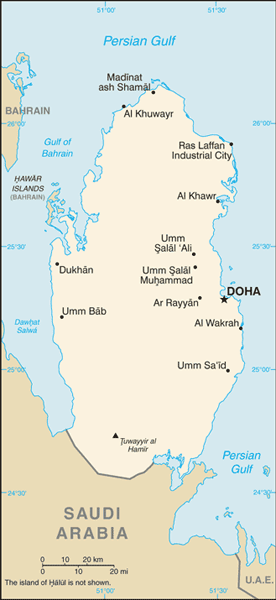
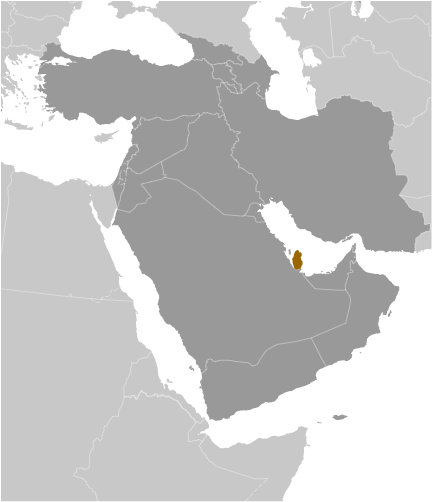
Teaching about Qatar is beneficial because it shows K-12 students how a tiny desert peninsula can become one of the richest countries in the world. Qatar sits in the Middle East on the Persian Gulf, attached to Saudi Arabia and near Bahrain and the United Arab Emirates. It is a small country, mostly flat and sandy, with very hot summers and little rainfall. Despite its harsh desert climate, Qatar holds some of the world's largest natural gas reserves, which have made it extremely wealthy.
Studying Qatar builds key geographic skills. Students can explore how desert climate limits farming and how the country relies on desalination for fresh water. They can also learn how natural gas exports connect Qatar to global energy markets and how its location on the Gulf made it important for shipping and trade. Qatar has used its wealth to build modern cities like Doha, with skyscrapers, museums, and stadiums.
The country's cultural geography is rich, with Arab and Islamic traditions, bustling souks, and a mix of foreign workers from many countries. For young learners, Qatar is memorable because of its desert setting, gas wealth, and the 2022 World Cup. Studying it builds map skills, cultural awareness, and understanding of how geography shapes a nation's economy and identity in the Middle East.
|