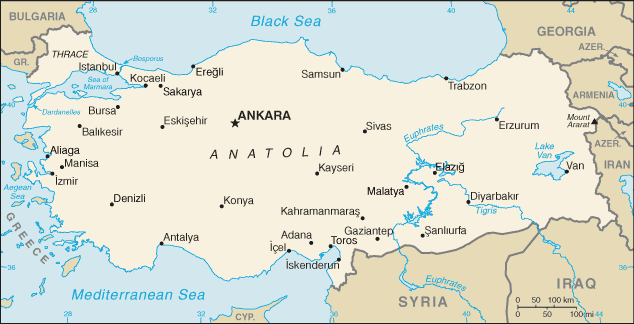
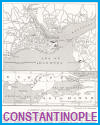
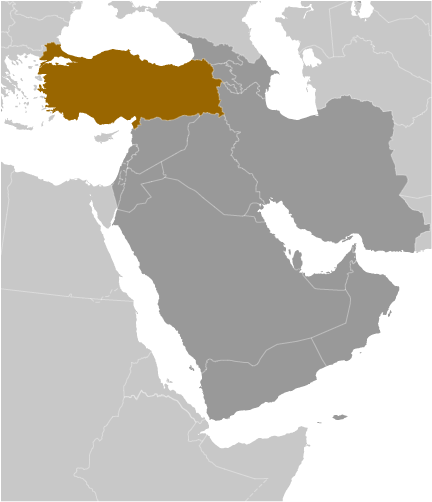
Teaching about Turkey is beneficial because it shows K-12 students how a country can bridge two continents and blend many cultures. Turkey sits at the crossroads of Europe and Asia, bordered by Greece, Bulgaria, Georgia, Armenia, Azerbaijan, Iran, Iraq, and Syria. It has coastlines on the Black Sea, the Aegean Sea, and the Mediterranean Sea. The Bosporus Strait runs through Istanbul, dividing the city between Europe and Asia and connecting the Black Sea to the Mediterranean.
Studying Turkey builds key geographic skills. Students can explore how mountains, coasts, and plateaus create different climates and farming regions. They can also learn how Turkey's location made it a center of trade and empires for thousands of years, from the Hittites to the Ottomans. Today, Turkey grows cotton, hazelnuts, and tea, and its factories export cars and textiles worldwide.
The country's cultural geography is rich, with Turkish, Kurdish, and other traditions shaping its food, music, and festivals. For young learners, Turkey is memorable because of Istanbul, Cappadocia's fairy chimneys, and its role as a bridge between continents. Studying it builds map skills, cultural awareness, and understanding of how geography shapes a nation's identity and global importance.
|