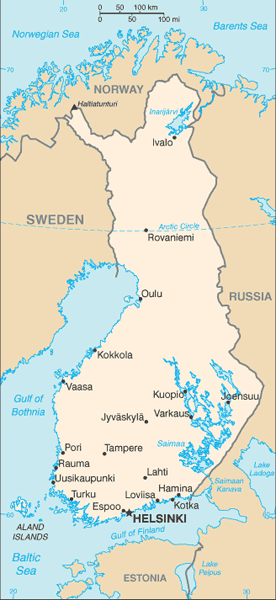
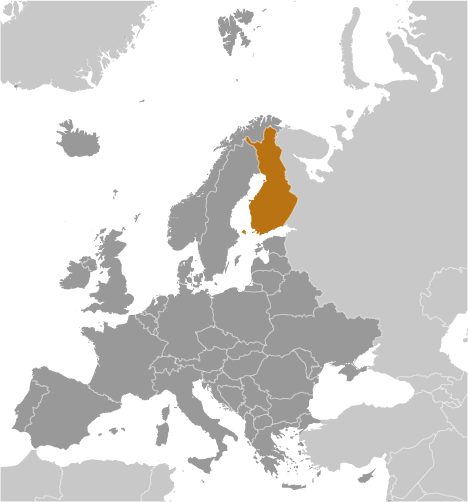
 Teaching about Finland is beneficial because it shows K-12 students how a northern country can thrive with forests, lakes, and a harsh climate. Finland sits in northern Europe, bordered by Sweden, Norway, and Russia, with a coastline on the Baltic Sea and the Gulf of Bothnia. It is one of the world's northernmost countries, and in Lapland, the sun never sets in summer and barely rises in winter. Forests cover most of Finland, and it has over 180,000 lakes, giving it the nickname "land of a thousand lakes."
Studying Finland builds key geographic skills. Students can explore how latitude shapes climate, daylight, and the northern lights. They can also learn how Finland uses its forests for timber and paper, and how it became a leader in clean energy and technology. Despite cold conditions, farming and fishing remain important in the south.
The country's cultural geography is rich, with saunas, folk traditions, and a strong education system. For young learners, Finland is memorable because of reindeer, snow, and the midnight sun. Studying it builds map skills, cultural awareness, and understanding of how geography shapes a nation's economy and identity in Northern Europe.
|