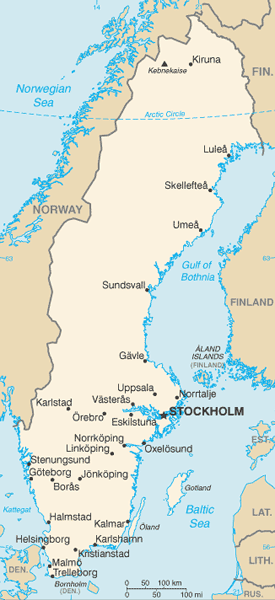
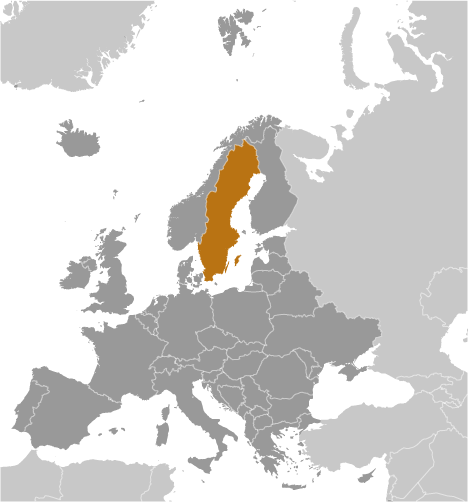
Teaching about Sweden is beneficial because it shows K-12 students how a long, forested country in Northern Europe can use its natural resources and geography to build a strong economy and a high quality of life. Sweden sits on the Scandinavian Peninsula, bordered by Norway and Finland, with a long coastline on the Baltic Sea and the Gulf of Bothnia. The country stretches far north into the Arctic Circle, where winters are dark and cold, and summers bring the midnight sun. Forests cover much of Sweden, and thousands of lakes dot the landscape.
Studying Sweden builds key geographic skills. Students can explore how latitude shapes climate, daylight, and seasons. They can also learn how Sweden uses its forests for timber and paper, and how it became a leader in clean energy, recycling, and sustainable design. Iron ore from the north supports mining, while southern regions are important for farming. The country's long coastline supports fishing and trade.
The country's cultural geography is rich, with Viking history, the Sami people in the north, and traditions like Midsummer. For young learners, Sweden is memorable because of IKEA, ABBA, and polar bears in the far north. Studying it builds map skills, cultural awareness, and understanding of how geography shapes a nation's economy and identity in Scandinavia.
|