

| Whitby Abbey in North Yorkshire, England |
|---|
| www.studenthandouts.com ↣ Geography ↣ Europe ↣ Northern Europe ↣ U.K. Geography Educational Resources |
 |
|
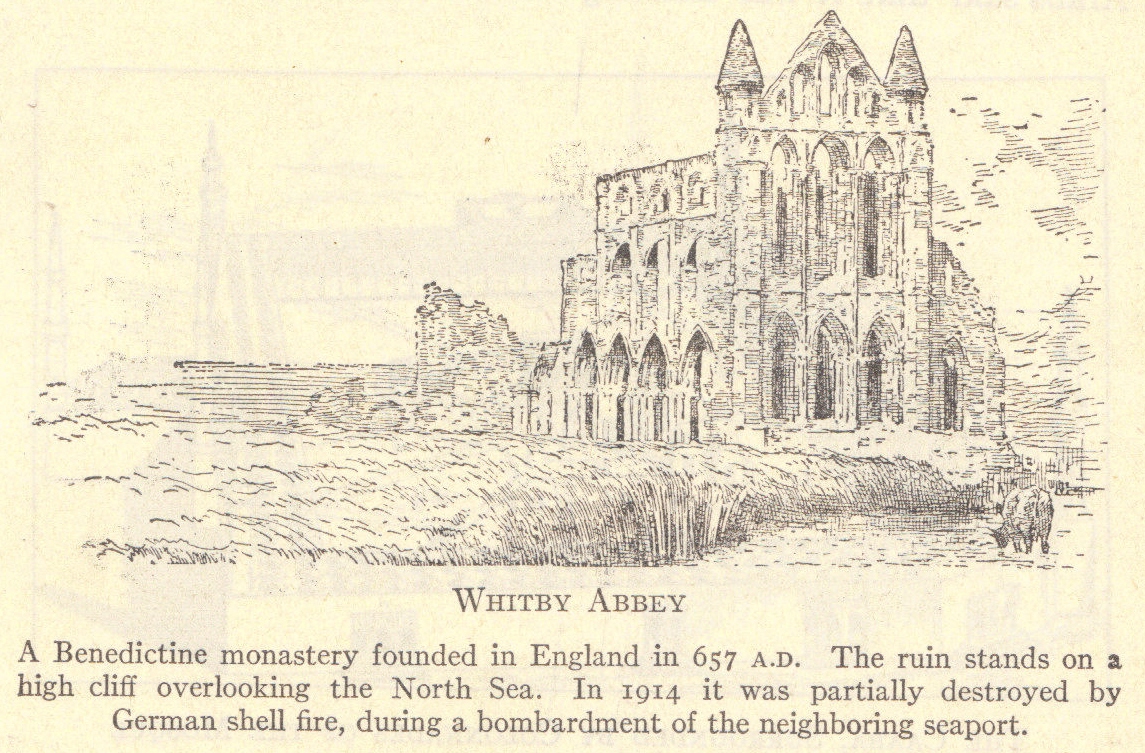
Whitby Abbey: A Benedictine monastery founded in England in A.D. 657: Whitby Abbey was a Benedictine monastery founded in Yorkshire, England, in 657 C.E. During Henry VIII's Protestant Reformation of England, the monastery was dissolved in 1538. The ruin stands on a high cliff overlooking the chilly North Sea. In 1914, Whitby Abbey was partially destroyed by German shell fire, during a bombardment of the neighboring seaport. Irish writer Bram Stoker's Dracula was most likely at least partially inspired by the ruins at Whitby, and sections of his most famous novel are set in and around Whitby Abbey (it is where Dracula comes ashore following a shipwreck). Stoker is known to have traveled to Whitby in 1890, and to there first encounter the name Dracula, entering it into his notes. Click here to enlarge. Why Should Your K-12 Students Learn About Whitby Abbey? K-12 students should learn about Whitby Abbey because it offers an interesting way to explore British history, architecture, and literature. Located on the coast of North Yorkshire, England, Whitby Abbey was founded in the seventh century. Although much of the building is now in ruins, its remains show how important religious centers were during the Middle Ages. Learning about Whitby Abbey helps students understand how religion influenced education, culture, and daily life in the past. The abbey also played a role in an important meeting in 664, when church leaders discussed how to follow certain Christian traditions. This event helps students see how beliefs shaped decisions in history. Whitby Abbey is also connected to literature. Its dramatic ruins inspired parts of Bram Stoker's famous novel Dracula. This connection can help students explore how real places inspire stories and creative ideas. By studying Whitby Abbey, students can develop an appreciation for historic landmarks and learn how the past continues to influence modern culture. It also encourages curiosity about British history, storytelling, and the importance of protecting historic sites for future generations. |
 |  |  |  |  |  |
| www.studenthandouts.com ↣ Geography ↣ Europe ↣ Northern Europe ↣ U.K. Geography Educational Resources |