


| Isambard Kingdom Brunel (1806-1859) Educational Resources |
|---|
| www.studenthandouts.com ↣ Historical Figures ↣ "B" Names Historical Figures ↣ Isambard Kingdom Brunel (1806-1859) |
Isambard Kingdom Brunel, born on April 9, 1806, in Portsmouth, England, was one of the most innovative and influential engineers of the 19th century. The son of the French engineer Marc Isambard Brunel, Isambard was exposed to engineering from a young age. He studied at the University of Caen in Normandy and later at the Lycée Henri-IV in Paris, receiving a thorough grounding in engineering principles.
 Brunel's career began with his involvement in the construction of the Thames Tunnel, the first tunnel under a navigable river. Despite numerous challenges, including flooding and financial difficulties, Brunel’s perseverance and innovative problem-solving helped complete the project in 1843.
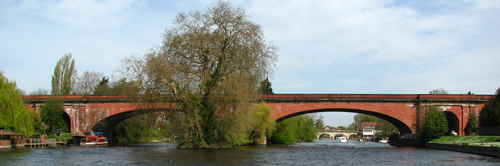
He is perhaps best known for his work on the Great Western Railway, which revolutionized rail travel in Britain. As chief engineer, Brunel designed numerous bridges, viaducts, and tunnels, including the famous Box Tunnel and the Maidenhead Railway Bridge. His design for the Great Western Railway was notable for its broad gauge, which provided greater stability and speed. 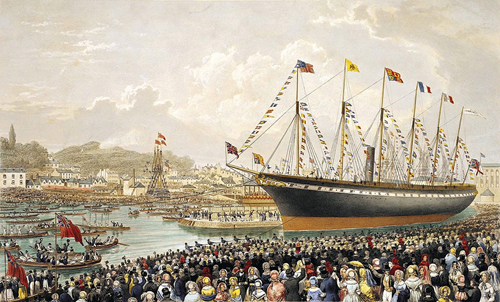 Brunel also made significant contributions to maritime engineering. He designed revolutionary steamships, including the SS Great Western, the SS Great Britain, and the SS Great Eastern. The SS Great Britain, launched in 1843, was the first iron-hulled, screw-propelled steamship to cross the Atlantic, setting new standards in shipbuilding.
Despite facing numerous setbacks and health issues, Brunel's vision and ingenuity left a lasting legacy. His work on railways, bridges, and ships transformed transportation and engineering practices, establishing him as one of the greatest engineers in history. Brunel passed away on September 15, 1859, but his contributions continue to be celebrated for their impact on modern engineering and infrastructure. 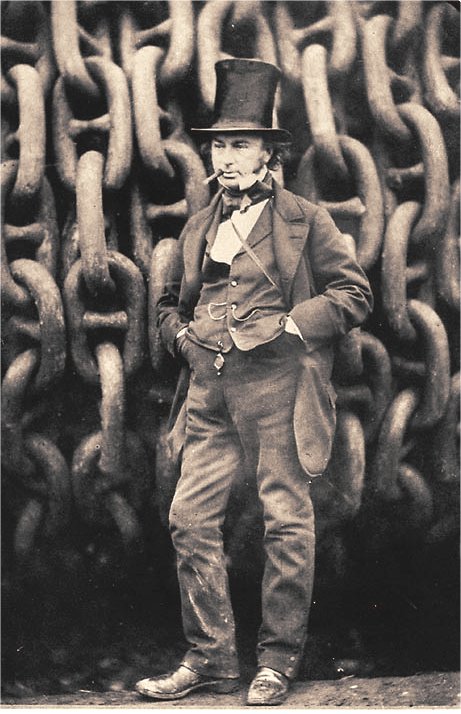 Isambard Kingdom Brunel (British, 1806-1859). Brunel is known for his engineering feats. Brunel played a prominent role in the construction of the Great Western Railway (the first major railway in Great Britain), the Box Tunnel, the SS Great Britain, the Thames Tunnel, and the Clifton Suspension Bridge above the River Avon in Bristol.
 Isambard Kingdom Brunel is photographed here in 1857, against the launching chains of the SS Great Eastern in Millwall. It was this ship that repaired connections on the Transatlantic telegraph cable (first laid in 1858) in 1866, allowing a permanent communications connection between North America and Europe. 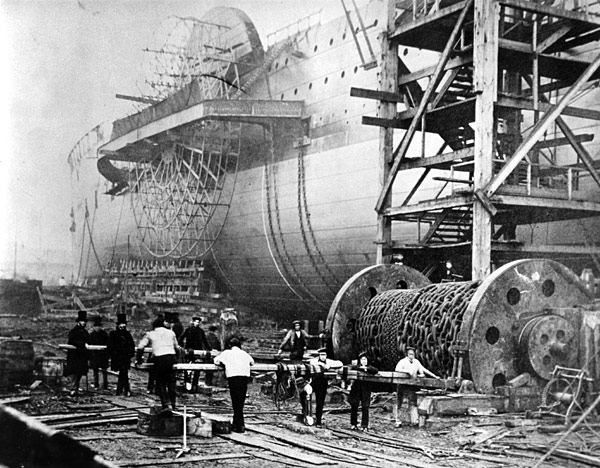 SS Great Eastern in 1858, Isle of Dogs, London, England, before its first launch on January 31, 1858.
The Great Eastern, designed in part by Isambard Kingdom Brunel, was the largest iron sailing steamship at the time. Note the large paddle visible on the side of the ship. The Great Eastern was the first ship to be equipped with a steering engine. Apart from being memorable for its size and design, the Great Eastern is also notable for laying the first lasting transatlantic telegraph cable (1866). 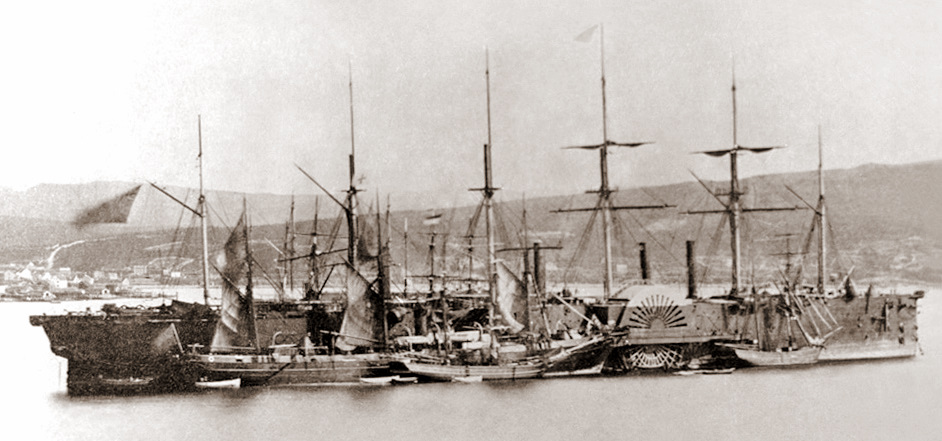 The SS Great Eastern, an iron sailing steamship designed by British engineer Isambard Kingdom Brunel, photographed in 1866, at the time it laid the first lasting transatlantic telegraph cable.
To learn more about this, we recommend reading Circuits in the Sea: The Men, the Ships, and the Atlantic Cable by Chester G. Hearn. Learning Extension: Have your students conduct additional research to create a timeline of Brunel's life. Task other students with creating posters, one for each of Brunel's major projects, with images and descriptions. |
| www.studenthandouts.com ↣ Historical Figures ↣ "B" Names Historical Figures ↣ Isambard Kingdom Brunel (1806-1859) |





