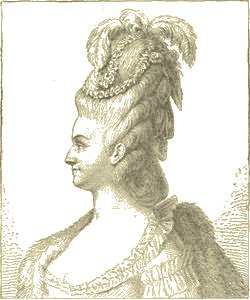
 Teaching about Marie Antoinette can be a great way for K-12 teachers to bring history to life. She was a queen of France, but her story is also a human story about money, reputation, and revolution. Your K-12 students can connect with her because she was a real person who faced big, serious problems.
First, Marie Antoinette helps students understand the French Revolution. She was married to King Louis XVI, and they ruled during a time when many French people were poor and hungry. While ordinary families struggled to buy bread, the royal court at Versailles lived in extreme luxury. This contrast helps students see why people became angry and wanted change. Marie Antoinette became a symbol of that unfairness, even though the real story is more complicated.
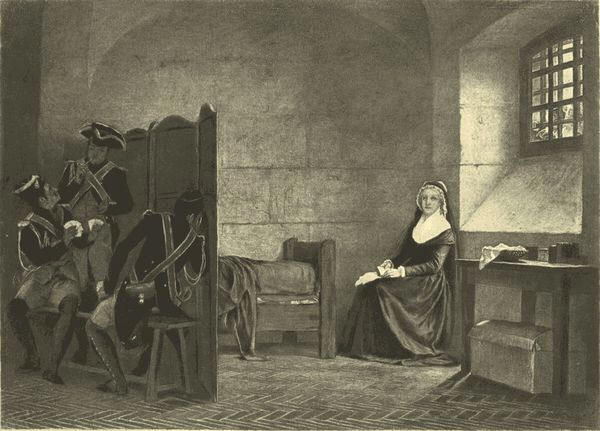 Second, her story teaches a lesson about rumors and reputation. People spread stories that she said, "Let them eat cake," when she heard the poor had no bread. Most historians agree she probably never said it. But the rumor stuck and made people hate her more. This is a powerful lesson for students living in a world of social media. It shows how false stories can spread and damage someone's life. Teachers can use this to talk about checking facts and being fair to others.
Finally, Marie Antoinette makes history memorable. Her dramatic life—marrying young, living in a fancy palace (château, plural châteaux), and eventually being executed during the revolution—captures students' attention. When students are curious about a person, they remember the bigger history around her. They learn about monarchy, revolution, and how societies can change quickly. For K-12 students, a queen who faced such a shocking ending is not a boring name in a textbook. She is a doorway into understanding a turning point in world history.
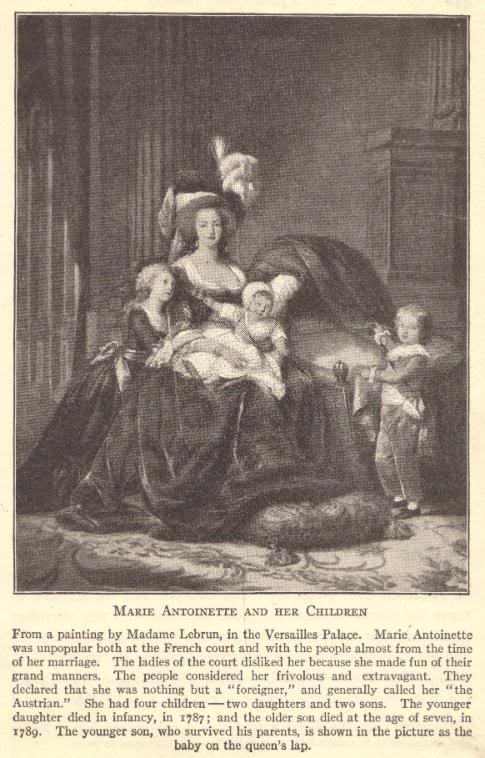
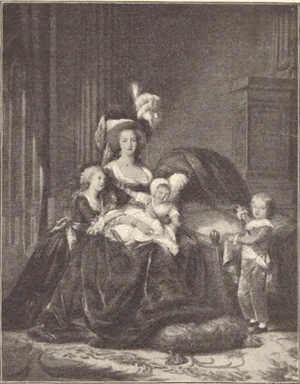 Right: Marie Antoinette and her children. From a painting by Madame Lebrun, in the Versailles Palace.
 Marie Antoinette was unpopular both at the French court and with the people of France almost from the time of her marriage. The ladies of the court disliked her because she made fun of their grand manners. The people considered her frivolous and extravagant. They declared that she was nothing but a "foreigner," and generally called her "the Austrian." She had four children—two daughters and two sons. The younger daughter died in infancy, in 1787; and the older son died at the age of seven, in 1789. The younger son, who survived his parents, is shown in the picture as the baby in the queen's lap.
Learning Extension: Have students use the internet to take a virtual tour of Versailles. |



 Right: Marie Antoinette and her children. From a painting by Madame Lebrun, in the Versailles Palace.
 Marie Antoinette was unpopular both at the French court and with the people of France almost from the time of her marriage. The ladies of the court disliked her because she made fun of their grand manners. The people considered her frivolous and extravagant. They declared that she was nothing but a "foreigner," and generally called her "the Austrian." She had four children—two daughters and two sons. The younger daughter died in infancy, in 1787; and the older son died at the age of seven, in 1789. The younger son, who survived his parents, is shown in the picture as the baby in the queen's lap.