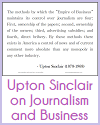
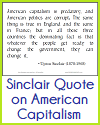
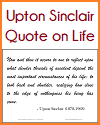
Upton Sinclair (1878-1968) was a Pulitzer Prize-winning American author and reformer, most famous for his 1906 novel, The Jungle. This groundbreaking work exposed the horrific and unsanitary conditions in Chicago's meatpacking industry. While Sinclair aimed to highlight the exploitation of immigrant workers, his graphic depictions of contaminated food shocked the public and directly led to the passage of the Pure Food and Drug Act and the Meat Inspection Act.
It is quite vital for your K-12 students to learn about Sinclair for several reasons. Firstly, he demonstrates the profound power of literature and journalism to drive tangible social and political change. His work is a prime example of the Progressive Era's spirit, showing how citizens can demand government accountability. Studying a riveting novel like The Jungle also helps your pupils analyze the complex relationship between capitalism, worker rights, and consumer safety—themes that remain deeply relevant today.
Ultimately, Sinclair's legacy teaches that investigative writing and moral outrage can be powerful tools for creating a more just society, inspiring your students to be better informed and actively engaged citizens.
|