 President Joseph R. Biden, the 46th President of the United States, assumed office in January 2021 after a decades-long career in public service. His presidency was defined by a focus on restoring democratic institutions, managing the nation's recovery from the COVID-19 pandemic, and enacting landmark legislation. Key achievements included the American Rescue Plan, which provided economic stimulus; the Bipartisan Infrastructure Law, a historic investment in roads, bridges, and broadband; and the Inflation Reduction Act, addressing climate change and healthcare costs.
Biden's foreign policy emphasized rebuilding alliances, particularly through NATO, and organizing a unified international response to Russia's invasion of Ukraine. His administration prioritized a foreign policy centered on "middle-class diplomacy" and countering authoritarianism.
A central theme of Biden's political identity was his appeal to working-class roots in Scranton, Pennsylvania, and his emphasis on bipartisanship. He was the oldest president in U.S. history (born November 20, 1942) , a fact that sparked ongoing public discussion about age and leadership.
While his administration presided over historically low unemployment and significant legislative action, it has also faced challenges including the chaotic withdrawal from Afghanistan, persistent inflation concerns, and deep political polarization. Throughout, Biden framed his presidency as a battle for the "soul of the nation," seeking to project stability and democratic resilience.
|



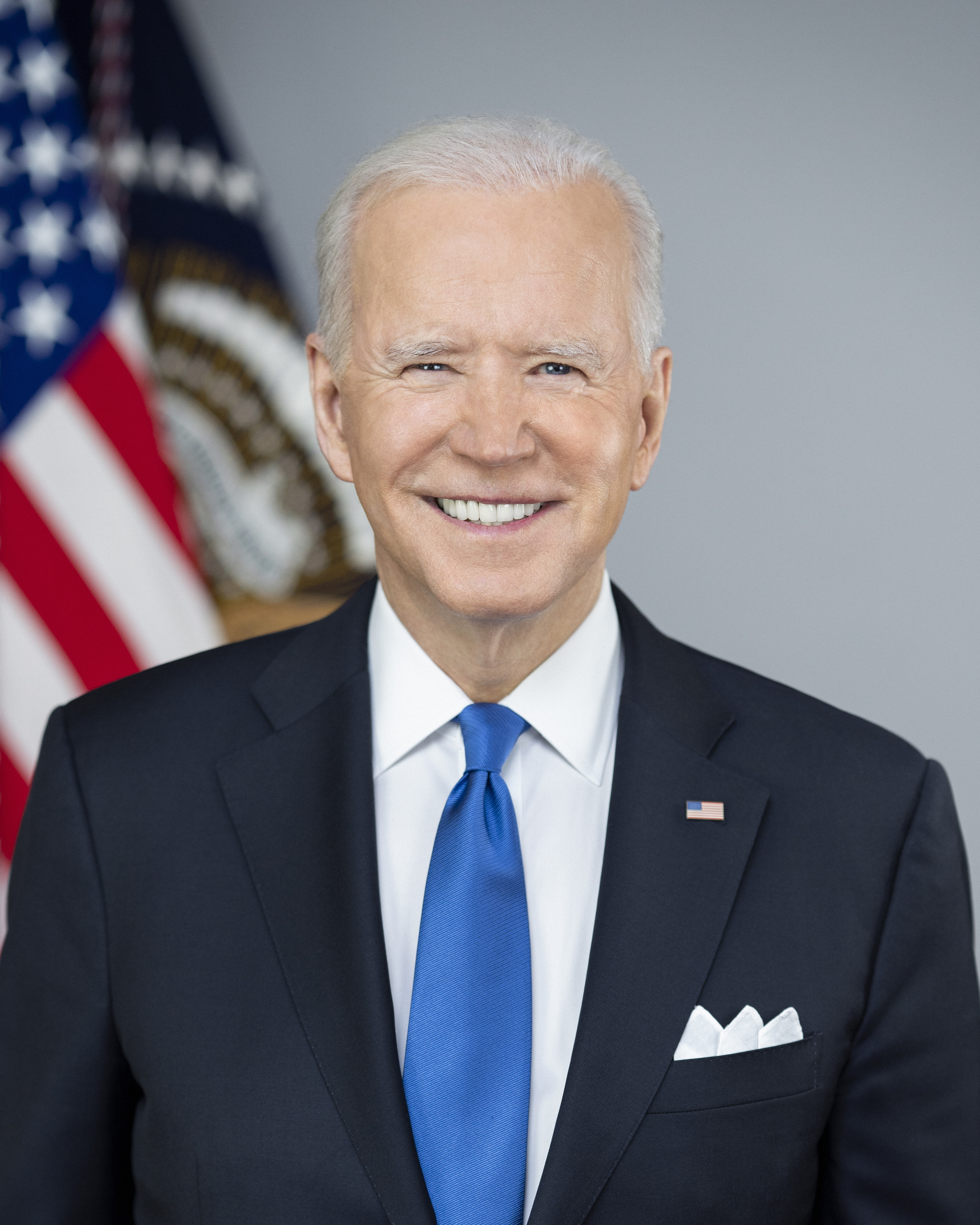 President Joseph R. Biden, the 46th President of the United States, assumed office in January 2021 after a decades-long career in public service. His presidency was defined by a focus on restoring democratic institutions, managing the nation's recovery from the COVID-19 pandemic, and enacting landmark legislation. Key achievements included the American Rescue Plan, which provided economic stimulus; the Bipartisan Infrastructure Law, a historic investment in roads, bridges, and broadband; and the Inflation Reduction Act, addressing climate change and healthcare costs.