 President Dwight D. Eisenhower, the 34th president of the United States, served from 1953 to 1961 after a legendary career as the Supreme Commander of Allied forces in Europe during World War II. His presidency was marked by a pragmatic, moderate conservatism that sought to balance fiscal responsibility with active governance.
Eisenhower's domestic legacy includes the landmark Federal-Aid Highway Act of 1956, creating the Interstate Highway System—the largest public works project in American history. He oversaw a period of sustained economic growth, strengthened Social Security, and navigated the early civil rights movement, notably sending federal troops to Little Rock, Arkansas, to enforce school desegregation.
In foreign policy, Eisenhower managed Cold War tensions through a strategy of "massive retaliation," relying on nuclear deterrence to contain communism while avoiding large-scale ground wars. He brokered an end to the Korean War, confronted the Suez Crisis, and issued the Eisenhower Doctrine, pledging aid to Middle Eastern nations resisting Soviet influence. His farewell address famously warned of the growing influence of the "military-industrial complex."
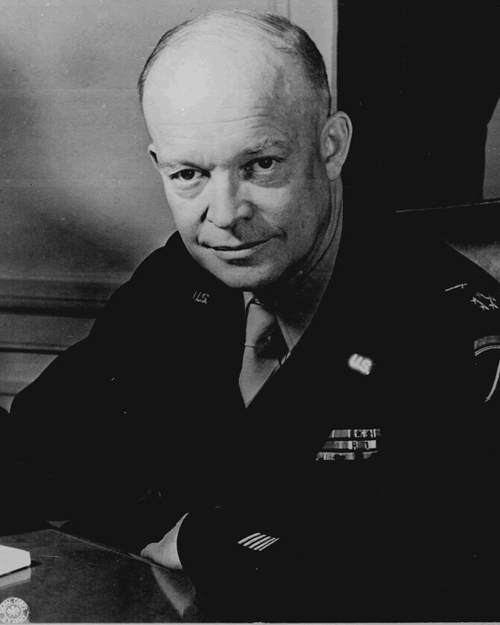
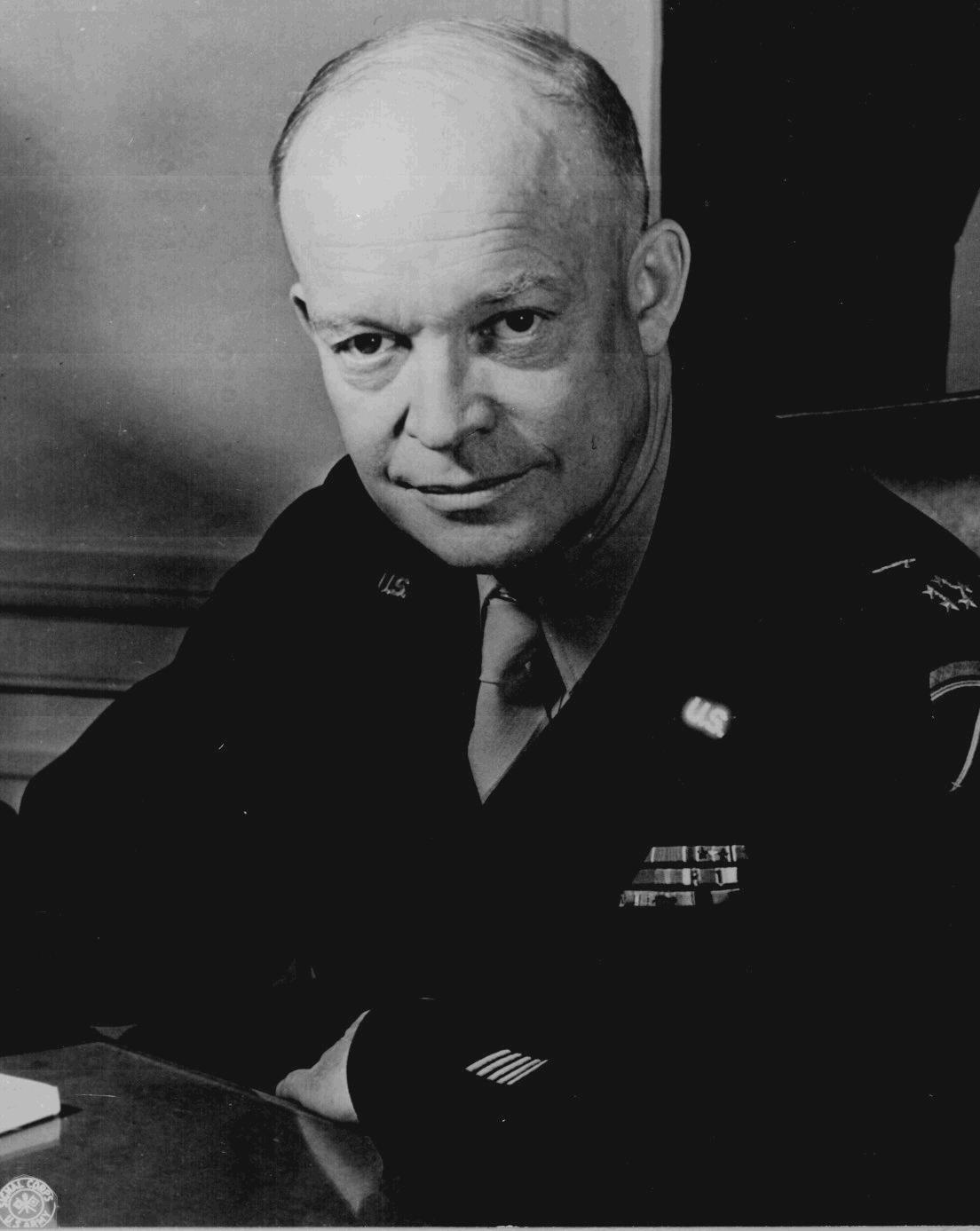
Photo, above right—Original caption: "General Dwight D. Eisenhower, Supreme Allied Commander, at his headquarters in the European theater of operations. He wears the five-star cluster of the newly-created rank of General of the Army." February 1, 1945. After helping to lead the United States to victory in World War II, Eisenhower would go on to become a popular American president. "I Like Ike" became a famous political slogan in the 1950s.
Often underestimated during his lifetime for his affable demeanor, Eisenhower is now widely regarded as a highly effective, disciplined leader who brought steady management, strategic foresight, and a commitment to national infrastructure and security to the presidency.
|









































 President Dwight D. Eisenhower, the 34th president of the United States, served from 1953 to 1961 after a legendary career as the Supreme Commander of Allied forces in Europe during World War II. His presidency was marked by a pragmatic, moderate conservatism that sought to balance fiscal responsibility with active governance.