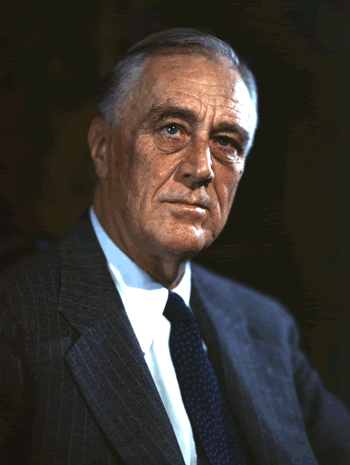
 President Franklin D. Roosevelt, the 32nd President of the United States, served an unprecedented four terms from 1933 until his death in 1945. He assumed office during the depths of the Great Depression, restoring national confidence with his bold leadership and the transformative New Deal—a series of programs, reforms, and agencies designed to provide relief, recovery, and reform. Landmark initiatives included the Civilian Conservation Corps, the Works Progress Administration, and the Social Security Act, which established a permanent safety net for Americans.
Roosevelt's presidency also redefined the federal government's role in the economy and fundamentally reshaped American politics, forging the New Deal coalition that dominated U.S. politics for decades. His Fireside Chats, informal radio addresses, communicated directly with the public, fostering trust and unity during times of crisis.
In foreign policy, Roosevelt guided the nation through most of World War II, providing crucial aid to Allies through Lend-Lease before the attack on Pearl Harbor. He served as a principal architect of the Allied grand strategy and championed the post-war vision of the United Nations. Despite facing personal challenges, including polio that left him paralyzed from the waist down, Roosevelt projected strength and optimism. His leadership during the twin crises of economic collapse and global war left an enduring legacy, fundamentally expanding the scope of the American presidency and government.
|


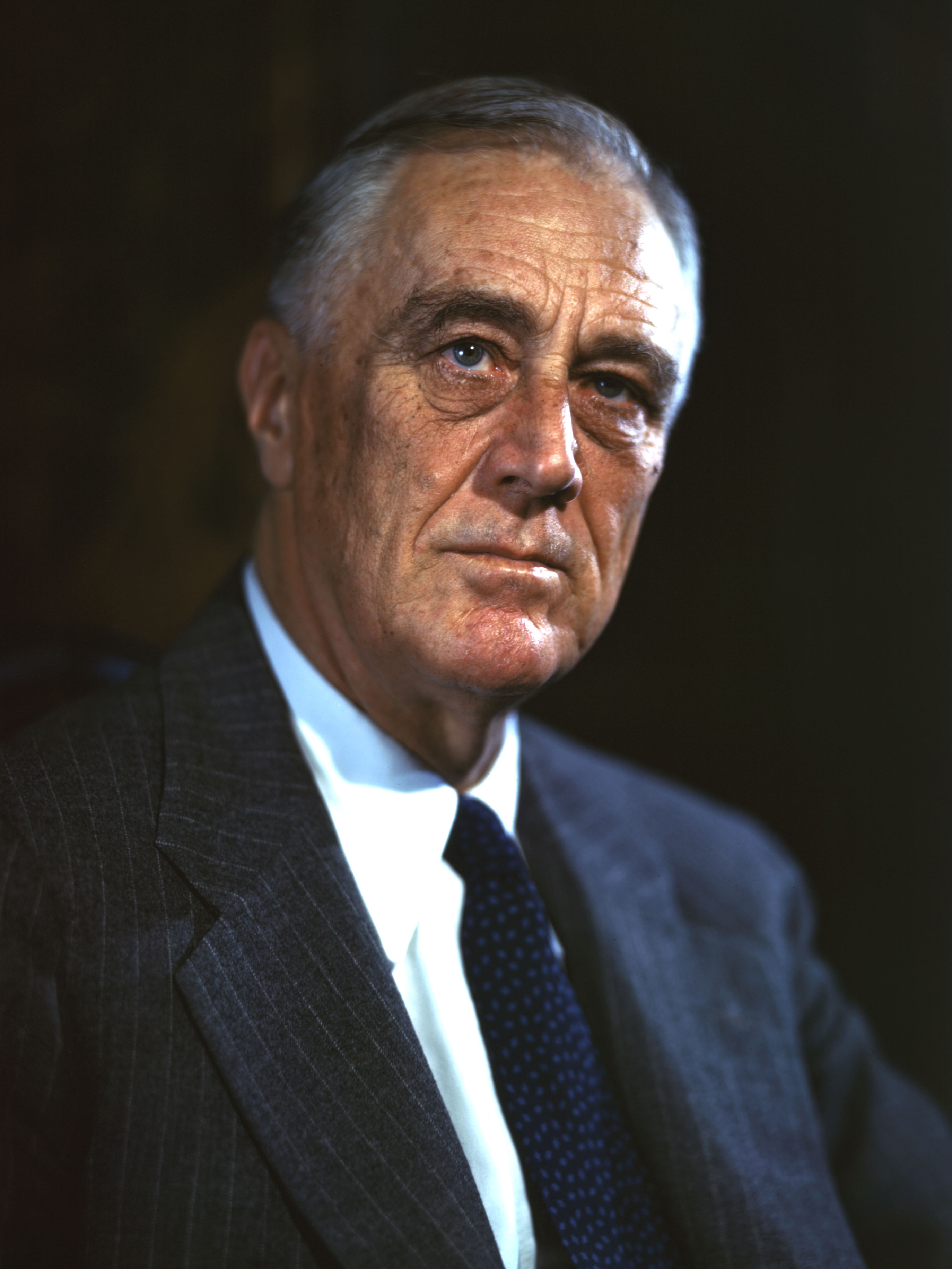 President Franklin D. Roosevelt, the 32nd President of the United States, served an unprecedented four terms from 1933 until his death in 1945. He assumed office during the depths of the Great Depression, restoring national confidence with his bold leadership and the transformative New Deal—a series of programs, reforms, and agencies designed to provide relief, recovery, and reform. Landmark initiatives included the Civilian Conservation Corps, the Works Progress Administration, and the Social Security Act, which established a permanent safety net for Americans.