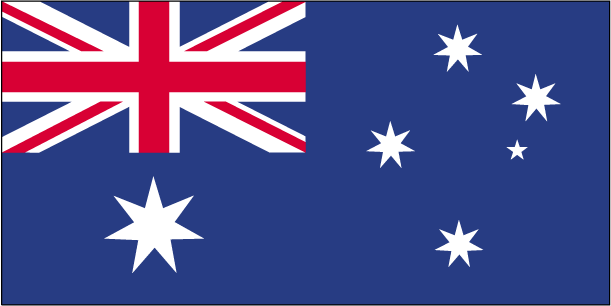
Learning about Heard Island and McDonald Islands is helpful because it introduces your K-12 students to one of the most remote and untouched places on Earth. This Australian territory sits in the southern Indian Ocean, about 1,500 miles north of Antarctica and roughly 2,600 miles southwest of Australia. The islands are volcanic and covered by glaciers, with Heard Island dominated by Big Ben, an active volcano that rises over 2,700 meters. The climate is cold, windy, and wet, and there is no permanent population.
Studying these islands builds key geographic skills. Your pupils can explore how volcanic activity and glaciers shape the same landscape, creating a rare and dramatic environment. They can also learn how extreme isolation supports wildlife found few other places, including penguins, seals, and albatrosses. The islands are a UNESCO World Heritage Site, protected for their natural value, which shows how geography connects to conservation.
For your smaller learners, Heard and McDonald Islands are memorable because of their volcanoes, glaciers, and remoteness. Studying them builds map skills, environmental awareness, and understanding of how geography shapes some of the world's wildest and least-visited places.
|