Learning the geography of Vietnam is essential for your K-12 students as it provides a critical lens for understanding not only the Vietnam War but also the nation's rich history, culture, and contemporary global role.
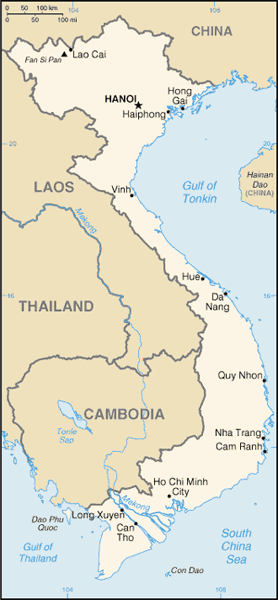
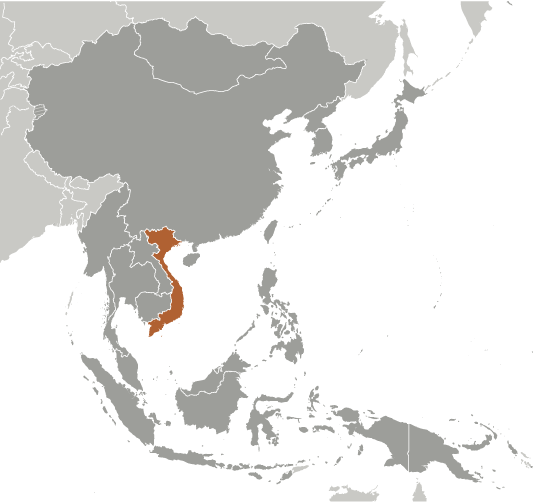
For younger students, locating Vietnam on a map establishes basic spatial awareness and challenges the tendency to view Asia as a monolithic region. As students mature, this geographic knowledge becomes foundational for analyzing historical events.
The country's unique "S"-shaped topography—a long, narrow coastal plain flanked by the Annamite Mountains and deltas of the Red and Mekong Rivers—directly shaped the course of the Vietnam War. Guerrilla tactics, supply lines like the Ho Chi Minh Trail, and major battles were all dictated by this terrain.
Furthermore, understanding the Mekong Delta's role as a vital agricultural region explains Vietnam's emergence as a major rice exporter.
In an increasingly interconnected world, this geographic literacy fosters a more nuanced understanding of Vietnam's people, its struggles for independence, and its current position in Southeast Asian geopolitics, cultivating empathy and informed global citizenship from an early age.
|