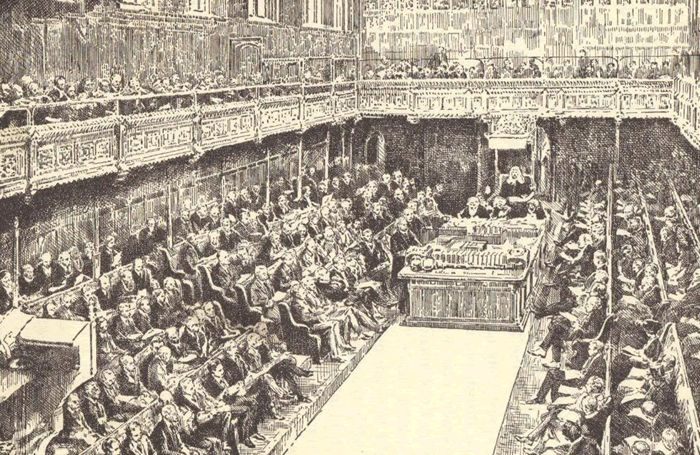
British Parliament, the headquarters of Great Britain's empire, which covered 40% of the earth's surface following World War I. House of Commons in session, 1920.
Learning about the British House of Commons is quite important for all of your K-12 students because it shows how democracy works in one of the world's oldest parliaments. The House of Commons is the lower chamber of the U.K. Parliament, where 650 members called MPs (Members of Parliament) are elected by voters to represent different areas. These MPs debate laws, argue about taxes and spending, and hold the government accountable by asking tough questions.
Your students can learn how bills become laws, how debates are run by a Speaker, and how the party with the most seats forms the government. The famous green benches and the weekly Prime Minister's Questions show how disagreement and discussion are part of decision-making.
Understanding the House of Commons helps your students compare it to the U.S. Congress and see how different countries organize democracy. It also encourages them to think about representation, voting, and how citizens can influence leaders. This builds civic awareness and helps your K-12 students become informed participants in their own communities.
Click here to enlarge this image.
|