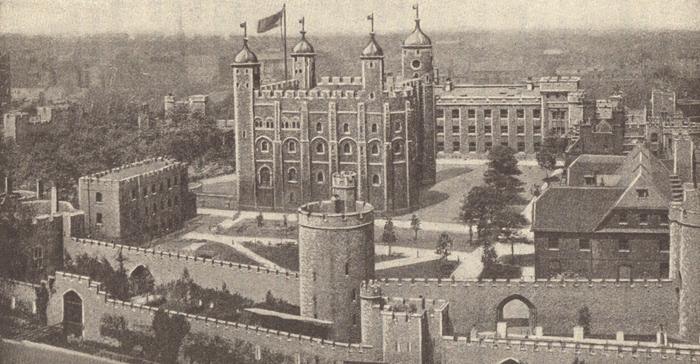
The Tower of London, located in London, England. The Tower is an irregular mass of buildings erected at various periods (1078-1399), surrounded by a battlemented wall and a deep moat. Begun in the reign of William the Conqueror (who became king following the Norman Invasion of 1066) as a royal palace and stronghold, it is best known in history as a prison.
A popular tourist destination, the Tower of London is today a UNESCO World Heritage Site. The Tower's list of famous prisoners includes Guy (Guido) Fawkes, William Wallace, Richard II of England, Henry VI of England, Thomas More, Anne Boleyn, and Elizabeth I of England.
Click here to enlarge.
Why Should Your K-12 Students Learn About the Tower of London?
K-12 students should learn about the Tower of London because it offers an exciting way to explore British history. Located in London, England, this historic castle was built nearly 1,000 years ago by the famed William the Conqueror. Over time, it has served as a royal home, a prison, and a place where pivotal historical events took place.
Learning about the Tower of London helps students understand how kings and queens ruled, how people were punished for crimes, and how power shaped life in the past. Famous prisoners were held there, including members of the royal family. Today, the tower is also home to the Crown Jewels, which are used in important royal ceremonies.
Studying the Tower of London can make history more interesting by connecting students to real people, places, and events. It also encourages them to ask questions about justice, leadership, and human rights. By learning about this famous landmark, students can better understand British culture and see how events from the past continue to influence the world today.
|