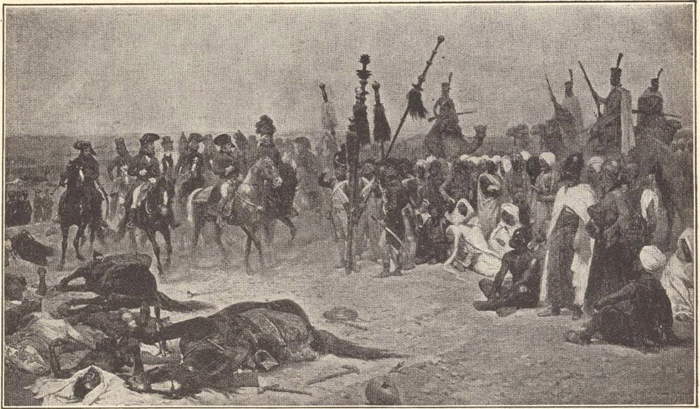
Napoléon Bonaparte in Egypt, 1798: It was during Napoléon Bonaparte's Egyptian campaign that the pyramids, sphinx, and other treasures of Egypt became fully known to modern Europeans, and when the Rosetta stone was discovered. Click here to enlarge this image.
Napoléon Bonaparte's Egyptian campaign, launched in 1798, was a bold and ambitious military expedition aimed at undermining British influence in the Mediterranean and establishing a French presence in the Middle East. The campaign began with Napoléon's departure from Toulon with a fleet of over 400 ships and approximately 35,000 soldiers. The expedition's goals were multifaceted: to cut off British trade routes to India, explore ancient Egyptian civilization, and extend French influence.
The French fleet arrived in Alexandria in July 1798, and Napoléon's forces quickly captured the city. Advancing inland, they faced the formidable Mamluk warriors at the Battle of the Pyramids near Cairo. Utilizing superior tactics and artillery, Napoléon achieved a decisive victory, famously declaring, "Soldiers, from the heights of these pyramids, forty centuries look down upon you." This victory secured French control over Egypt.
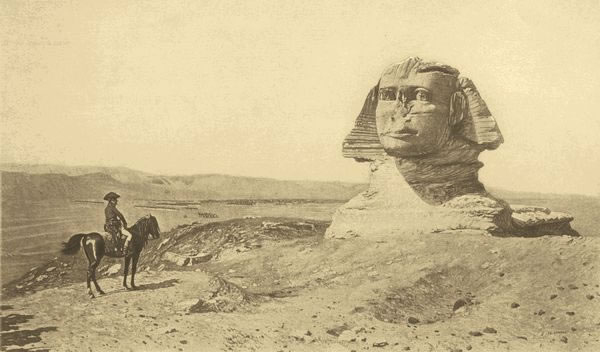 However, the campaign faced significant challenges. Admiral Horatio Nelson's British fleet dealt a severe blow to the French by destroying their fleet at the Battle of the Nile, stranding Napoléon's army in Egypt. Additionally, the French faced fierce resistance from local populations and struggled with supply issues and disease.
Despite these setbacks, Napoléon initiated scientific and cultural projects, including the discovery of the Rosetta Stone, which would eventually unlock the secrets of ancient Egyptian hieroglyphs.
Ultimately, geopolitical pressures and deteriorating conditions forced Napoléon to abandon the campaign. In 1799, he secretly returned to France, leaving his army behind. The Egyptian campaign, while a military failure, had long-lasting impacts, fostering European interest in Egyptology and showcasing Napoléon's visionary ambition and strategic boldness.
|