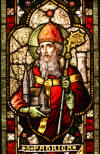
 Saint Patrick is born Succat (also called Patricius due to his patrician background) circa 372 C.E. in what is now Scotland. He died in Ireland on March 17, 466 C.E.
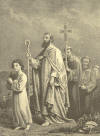 After being captured by Irish raiders and working as a slave in Ireland for several years, Saint Patrick makes a vow to return to Ireland as a missionary.
Saint Patrick, patron saint of Ireland, undertook a missionary enterprise in the fifth century that fundamentally transformed the island's religious and cultural landscape. Captured from Britain as a teenager and enslaved in Ireland for six years, he later returned after divine instruction to evangelise the Irish people. His mission, beginning around A.D. 432, was strategically insightful. Rather than attempting to eradicate indigenous Celtic culture, he skilfully integrated Christian symbolism with existing pagan traditions, famously using the three-leaf shamrock to explain the Holy Trinity.
 Patrick focused his efforts on converting the island's ruling families and clan chiefs, understanding that their conversion would encourage their communities to follow. He established monastic communities, such as the foundation at Armagh, which became vital centres of faith, learning, and stability during Europe's so-called Dark Ages. These monasteries would later serve as beacons of scholarship, preserving classical knowledge and sending out missionaries to continental Europe.
His work, detailed in his own writings like the Confessio, was not without peril, including opposition from pagan priests and political leaders. Yet, through perseverance, Patrick successfully planted a deeply rooted, monastic-based Christianity that endured and flourished. By his death, Ireland was effectively a Christian nation, earning him the enduring title of "Apostle of Ireland."
FYI: The Irish (Gaeilge or Gaelic) spelling of Patrick is Padraig or Padraic (as in the Irish revolutionary leader Padraig Pearse; you can read about Irish independence here).
 Interested in learning more about St. Patrick? Get our 16-page student workbook on Saint Patrick here. Designed to appeal to students in grades 7-12 with a wide variety of learning styles, this workbook can be downloaded immediately (PDF file).
Students read about the subject's life and work, then answer questions––ranging from basic recall to critical thinking--on the text. There are even fun activities. The titles in our "Biography Workbook Series" are designed to deliver important historical content while improving reading comprehension and vocabulary. They are ideal for both homeschoolers and classroom teachers
|



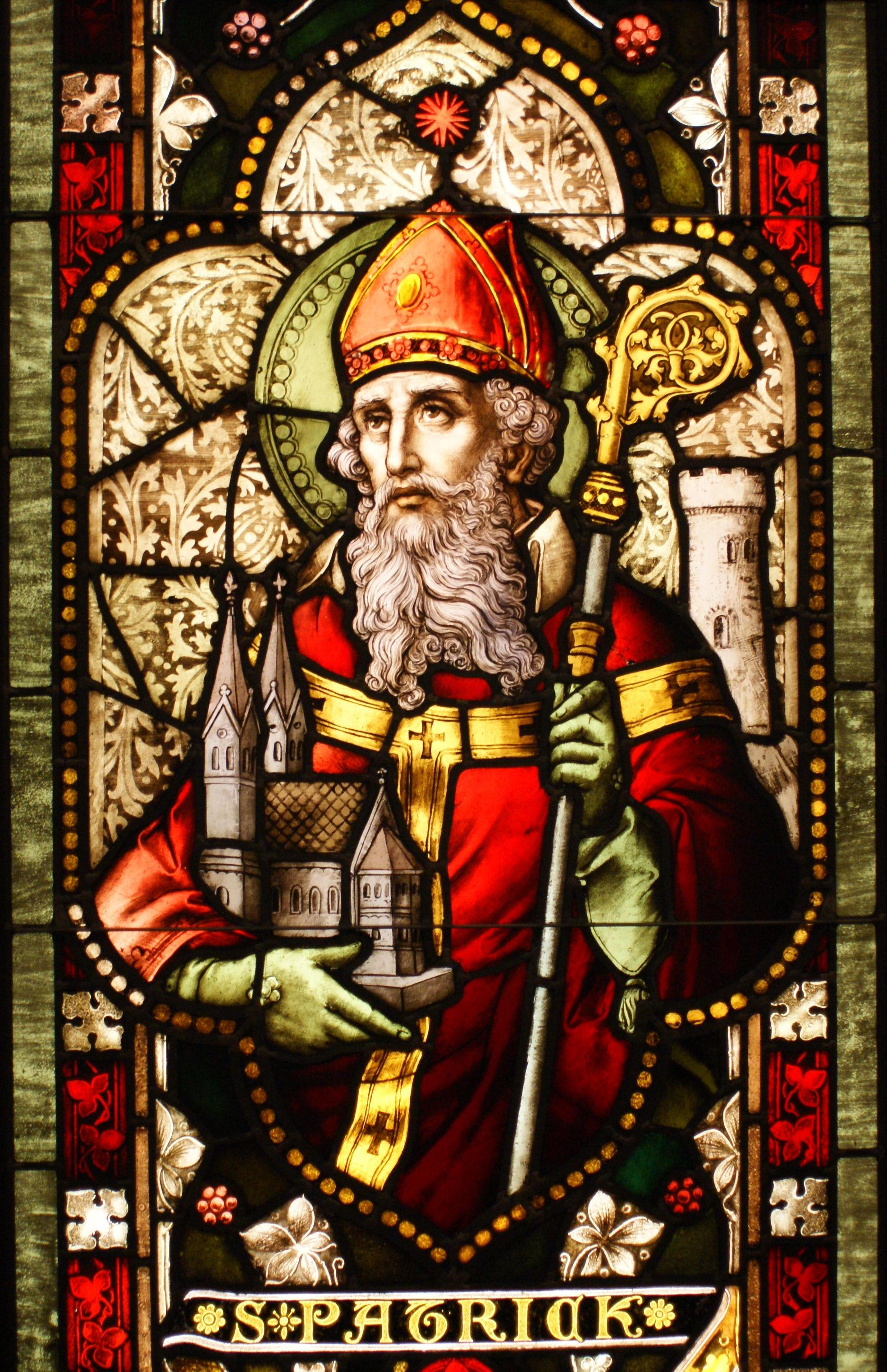 Saint Patrick is born Succat (also called Patricius due to his patrician background) circa 372 C.E. in what is now Scotland. He died in Ireland on March 17, 466 C.E.
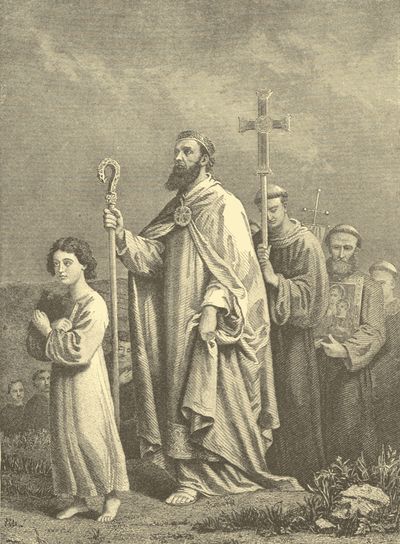 After being captured by Irish raiders and working as a slave in Ireland for several years, Saint Patrick makes a vow to return to Ireland as a missionary.
 Patrick focused his efforts on converting the island's ruling families and clan chiefs, understanding that their conversion would encourage their communities to follow. He established monastic communities, such as the foundation at Armagh, which became vital centres of faith, learning, and stability during Europe's so-called Dark Ages. These monasteries would later serve as beacons of scholarship, preserving classical knowledge and sending out missionaries to continental Europe.