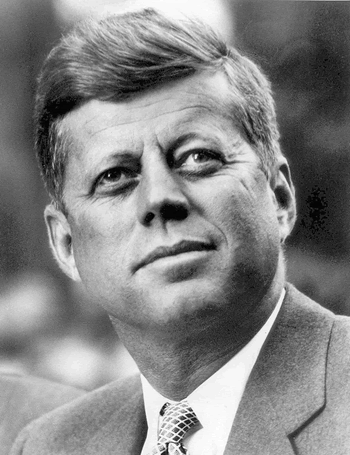
 President John F. Kennedy, the 35th President of the United States, served from 1961 until his assassination in November 1963. Though his presidency was cut short after just 1,000 days, Kennedy's leadership became emblematic of a new generation of American optimism, idealism, and Cold War resolve.
Kennedy's inaugural address famously urged Americans to "ask not what your country can do for you—ask what you can do for your country," setting the tone for a presidency defined by public service and vigorous engagement with global challenges. His administration launched the Peace Corps, which sent American volunteers to assist developing nations, and committed the nation to the ambitious goal of landing a man on the moon by the end of the decade—a vision realized in 1969.
In foreign policy, Kennedy navigated the most dangerous moments of the Cold War. He authorized the failed Bay of Pigs invasion in 1961 but demonstrated steady leadership during the Cuban Missile Crisis of October 1962, when the world stood on the brink of nuclear war. His deft diplomacy, including a naval blockade and secret negotiations with Soviet Premier Nikita Khrushchev, led to the withdrawal of Soviet missiles from Cuba.
Domestically, Kennedy introduced the New Frontier agenda, advocating for civil rights, healthcare reform, and tax cuts—initiatives that his successor, Lyndon B. Johnson, would see enacted after his death. Kennedy's assassination in Dallas on November 22, 1963, shocked the nation and the world, solidifying his legacy as a symbol of youthful promise, unfinished potential, and the enduring power of presidential leadership.
|

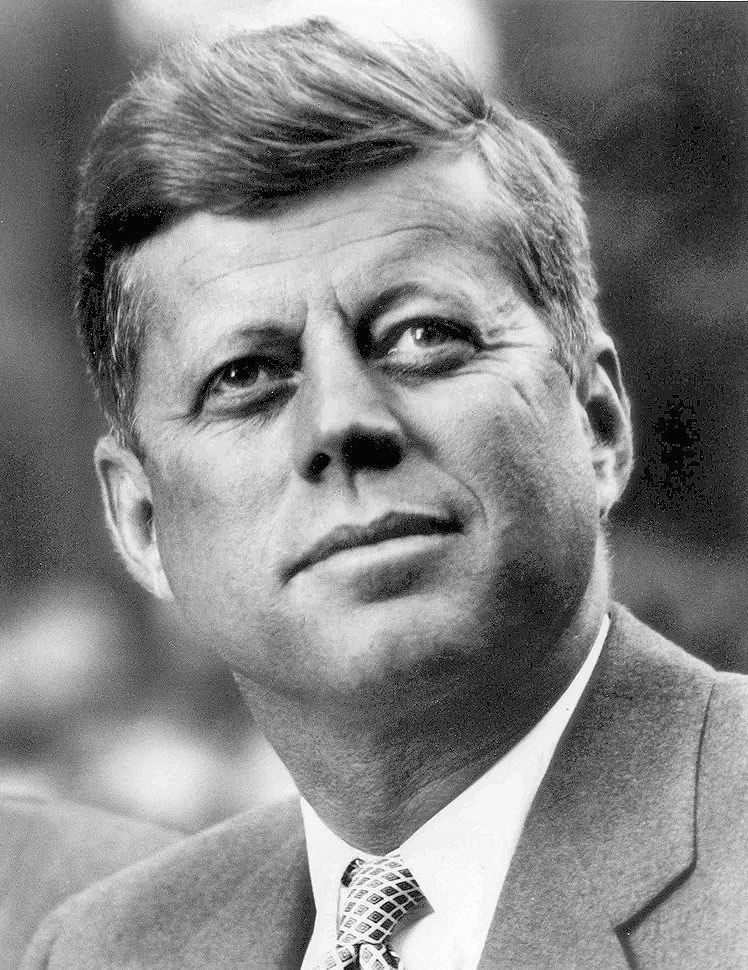 President John F. Kennedy, the 35th President of the United States, served from 1961 until his assassination in November 1963. Though his presidency was cut short after just 1,000 days, Kennedy's leadership became emblematic of a new generation of American optimism, idealism, and Cold War resolve.