Pharaoh Khafra, also known as Chephren, ruled ancient Egypt during the Fourth Dynasty of the Old Kingdom, around 2570 B.C.E. He was likely a son of Pharaoh Khufu, the builder of the Great Pyramid, and succeeded his brother Djedefre to the throne. Khafra is best remembered for constructing the second-largest pyramid on the Giza Plateau. Though slightly smaller than his father's, his pyramid appears taller because it was built on higher ground and retains some of its original smooth casing stones near the apex.
Khafra's most enduring legacy, however, is the Great Sphinx. Most Egyptologists believe that this colossal limestone statue—with a lion's body and a human head bearing Khafra's features—was carved during his reign. The Sphinx served as a guardian for his pyramid complex, aligning with solar worship that became prominent in the Old Kingdom. Khafra also pioneered the use of the Valley Temple, a remarkably durable structure built with massive granite blocks, where his body would have been prepared for burial.
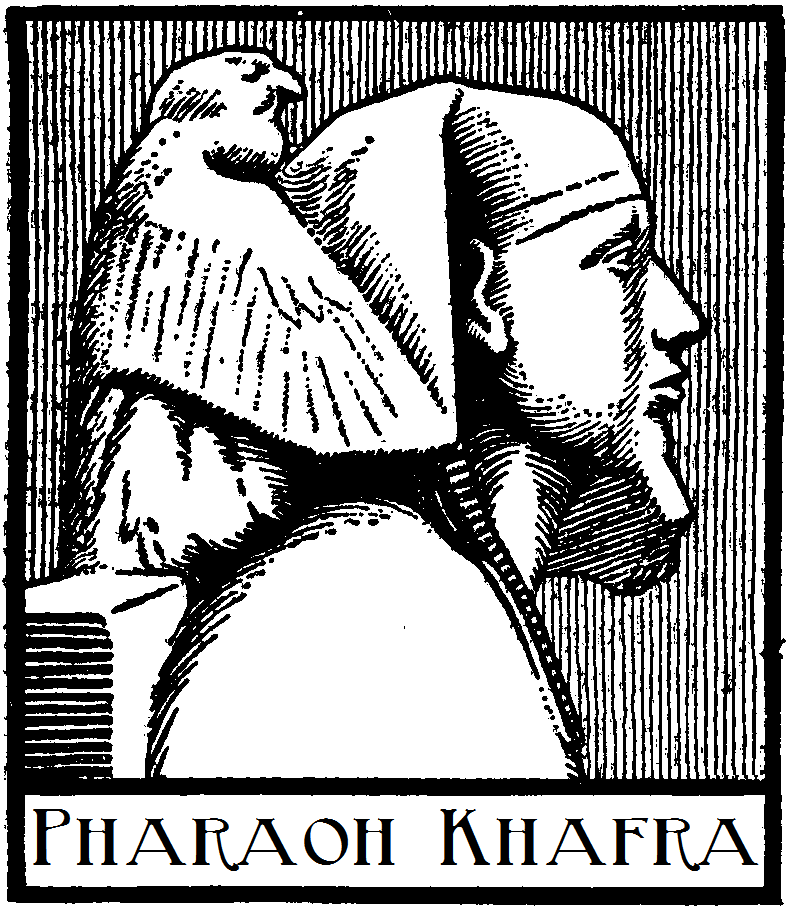
Artistic representations of Khafra, such as the famous diorite statue found in his Valley Temple, project an idealized, godlike authority. The falcon god Horus appears behind his head, wings spread in protection, emphasizing the pharaoh's divine status. Although his reign lasted roughly twenty-five years, Khafra's architectural and sculptural achievements helped define the grandeur of ancient Egypt's Pyramid Age, leaving a timeless symbol of immense royal power.
|