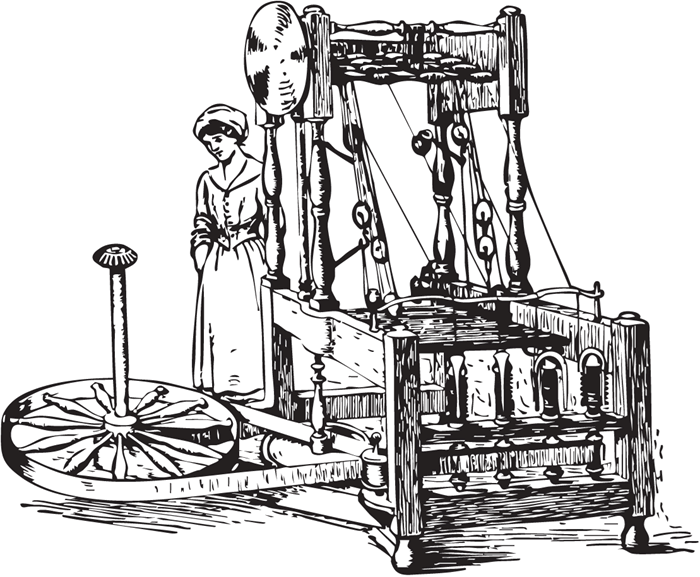
Richard Arkwright's first spinning frame. The Industrial Revolution started first primarily in the area of textile (fabric) production.
Click here to enlarge.
High school World History students should learn about Richard Arkwright's spinning frame because it marks a turning point in industrialization. Patented in 1769, the water-powered frame mechanized cotton spinning, vastly increasing production and lowering costs. This innovation helped shift manufacturing from homes to factories, creating the factory system that reshaped labor, urbanization, and society.
Studying the spinning frame illuminates the causes of the Industrial Revolution, the rise of wage labor, and the technological momentum that transformed economies worldwide. It also invites critical discussion of progress alongside harsh working conditions, child labor, and inequality. Understanding Arkwright's contribution helps students grasp how a single invention can profoundly alter global history, economics, and everyday life.
|