Our free online test-prep quizzes, puzzles, and games, are designed to be both educational and fun. We know from our own personal classroom experience that these quizzes will help students to not only pass their tests, but excel in their coursework. We'd offer a money-back guarantee, but the games are already free, LOL.
Have fun reviewing course material, studying for a classroom test, getting ready for standardized college admissions tests (like the ACT, SAT, AP, or GRE*), or prepping for state proficiency tests (such as the Regents or a state graduation test). Research shows that studying = positive results. The more familiar you are with the material, the better you will do on any test. Good luck!
Engagement and Motivation: Learning games are inherently engaging and can motivate students to participate actively in the educational process. They often incorporate elements like competition, rewards, and challenges that make learning enjoyable and encourage students to stay focused. We all know the struggle of getting kids to focus!
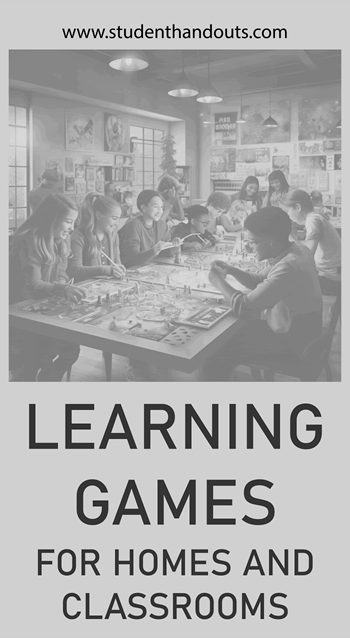 Active Learning: Games promote active learning, requiring participants to apply knowledge, solve problems, and make decisions in real-time. This hands-on approach can enhance understanding and retention of information compared to passive learning methods like reading or listening.
Problem-Solving Skills: Many games, especially strategy and puzzle games, require players to think critically, plan ahead, and solve complex problems. These skills are transferable to academic subjects and real-life situations.
Collaboration and Communication: Multiplayer and cooperative games foster collaboration and communication skills. Students often need to work together, discuss strategies, and share information to succeed in these games. This can improve teamwork and social skills.
Immediate Feedback: Games provide immediate feedback on performance, allowing players to assess their mistakes and adjust their strategies accordingly. This rapid feedback loop can accelerate the learning process and help students identify areas for improvement.
Customization and Adaptability: Educational games can be tailored to match individual students' skill levels and learning objectives. This adaptability ensures that students are challenged at an appropriate level and can progress at their own pace.
Real-World Application: Some games simulate real-world scenarios or historical events, providing a practical context for learning. This can help students apply their knowledge to real-life situations and better understand complex concepts.
Memory Enhancement: Games often require players to remember information, such as rules, strategies, or in-game facts. This memory training can help improve memory retention and recall in academic settings.
Stress Reduction: Playing games can reduce stress and anxiety, which can be beneficial for students facing academic pressure. A relaxed and enjoyable learning environment can lead to better learning outcomes.
Interest in STEM (Science, Technology, Engineering, and Mathematics): Educational games related to STEM subjects can pique students' interest in these fields and encourage them to explore related academic topics.
Progress Tracking: Many educational games offer progress tracking and analytics, allowing educators and students to monitor performance and identify areas that need improvement.
Technology Proficiency: Many educational games are digital, which can help students become more proficient in using technology—a crucial skill in today's digital age.
Accessibility: Digital games can be easily accessed on various devices, making them a convenient study tool for students with different learning preferences and schedules.
While our free educational test-prep games can be powerful study tools, it's essential to strike a balance between gaming and other learning methods to ensure a well-rounded education. Additionally, the quality and effectiveness of educational games can vary, so careful selection and integration into the curriculum are important. Choose what works best for your kids, and have fun!
|