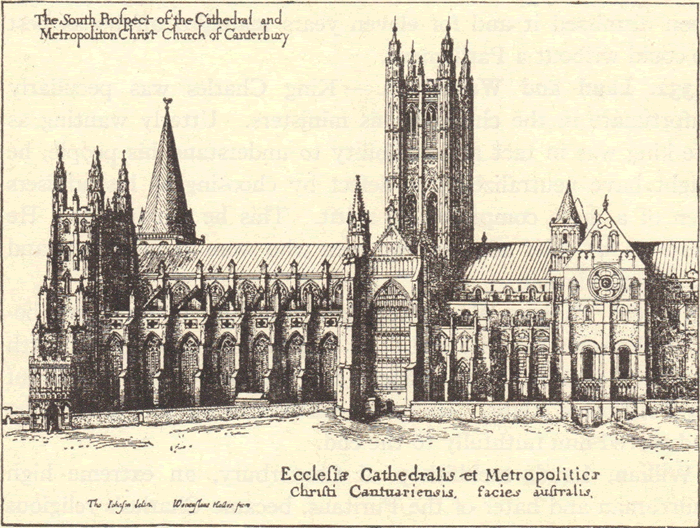
Canterbury Cathedral—the beautiful seat of the famed archbishops of Canterbury, primates of England, from the time of Saint Augustine in 597. The present cathedral dates from the eleventh century and is a fine example of English Gothic architecture. It was to this shrine that Geoffrey Chaucer's company made their pilgrimage. The old archbishop's palace, nearby, was destroyed by the Puritans during the primacy of Archbishop Laud.
Learning about Canterbury Cathedral is important for your K-12 students because it connects history, religion, and architecture in one remarkable place. Canterbury Cathedral sits in Kent, England, and is one of the oldest Christian churches in the country. It was founded in A.D. 597 and became famous after Thomas Becket, the Archbishop of Canterbury, was murdered there in 1170. His death made the cathedral a major pilgrimage site, inspiring Geoffrey Chaucer's Canterbury Tales.
Students can explore its Gothic architecture, stained glass, and soaring towers. They can also learn how the cathedral became the mother church of the worldwide Anglican Communion. For young learners, the cathedral is memorable because of its dramatic history, royal tombs, and beautiful stonework. Studying it builds cultural awareness, connects literature and religion, and shows how buildings can tell stories about power, faith, and conflict. It helps students understand how the past shapes the present.
Click here to enlarge this image.
|