Teaching about gorgeous Clipperton Island (Isla de la Pasión in Spanish and Île de la Passion in French) is incredibly enriching because it shows K-12 students how a tiny, uninhabited coral atoll can raise big questions about geography, history, and environmental science.
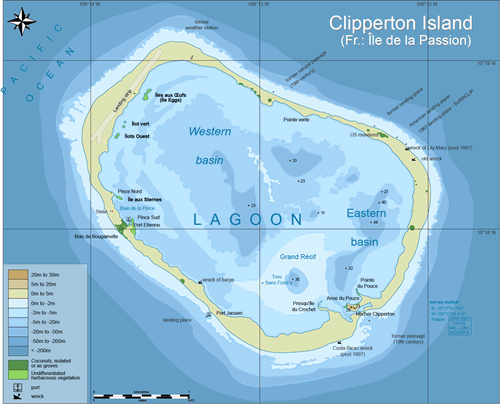 Clipperton Island sits in the eastern Pacific Ocean, about 700 miles southwest of Mexico. It is a French territory, but it has no permanent population. The island is a coral atoll, which means it is a ring of coral surrounding a lagoon. The lagoon is completely enclosed, and the island is flat, with no hills or rivers. The climate is tropical, with heavy rain and strong winds.
Studying Clipperton builds key geographic skills. Students can explore how coral atolls form on top of sinking volcanic islands and how isolation shapes wildlife. They can also learn how the island's location in the Pacific influenced its history. In the early 1900s, a small group of people lived there to mine guano, but they were cut off by war and most died. This tragic story shows how geography can affect survival. Today, the island is visited only by scientists and fishermen.
The island's cultural geography is minimal because no one lives there, but its history connects to Mexico, France, and guano mining. For young learners, Clipperton is memorable because of its lagoon, crabs, and remote setting. Studying it builds map skills, environmental awareness, and understanding of how geography shapes history and science in the Pacific.
|



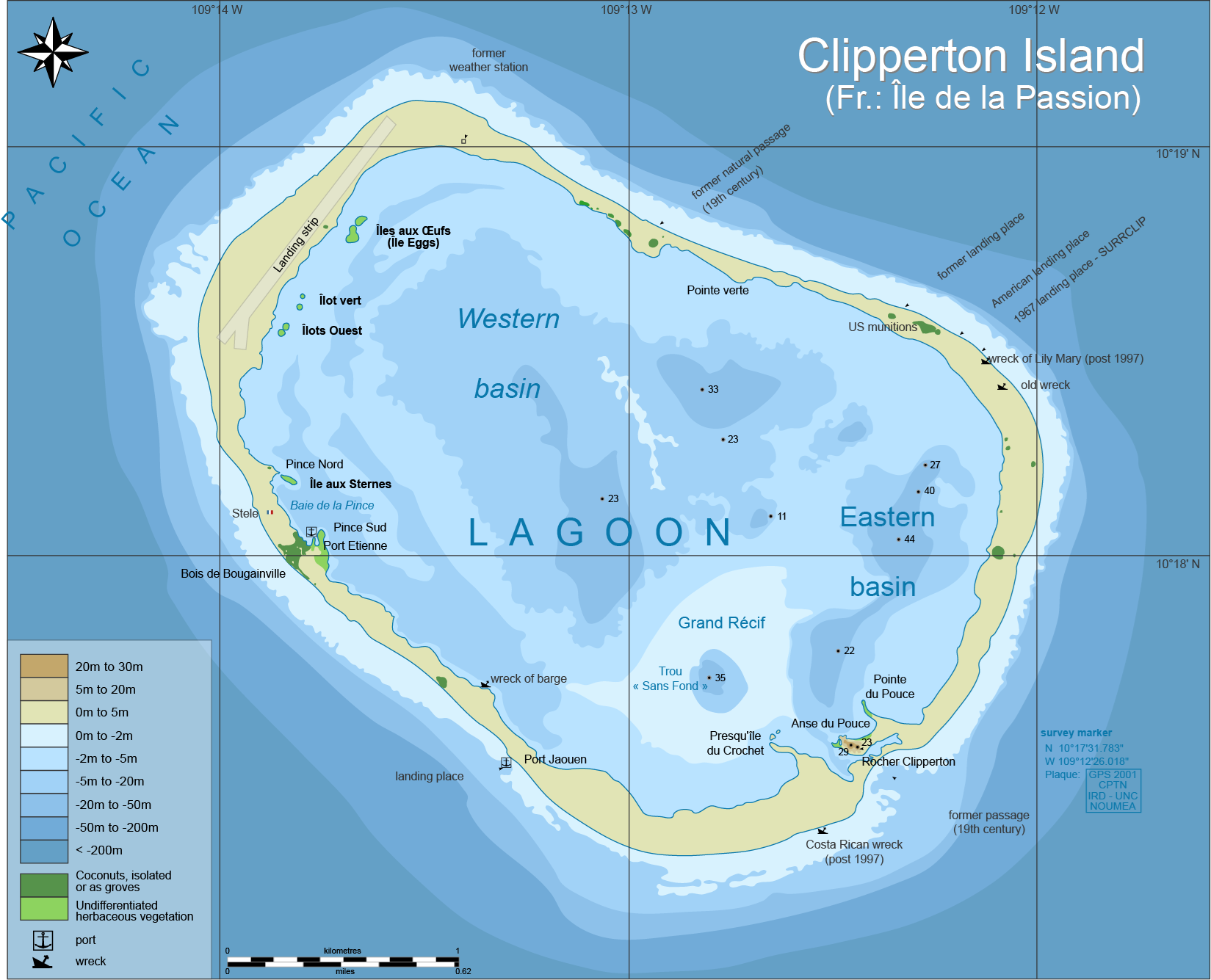 Clipperton Island sits in the eastern Pacific Ocean, about 700 miles southwest of Mexico. It is a French territory, but it has no permanent population. The island is a coral atoll, which means it is a ring of coral surrounding a lagoon. The lagoon is completely enclosed, and the island is flat, with no hills or rivers. The climate is tropical, with heavy rain and strong winds.