Teaching students about Nicaragua's geography gives K-12 educators a rich and engaging way to connect maps, culture, and real-world issues. This beautiful Central American country offers lessons that students will remember long after class ends.
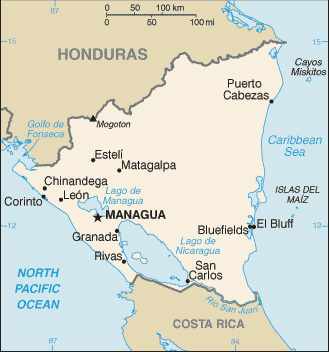
Nicaragua has a striking and varied landscape. It features volcanic chains, two huge freshwater lakes, lush rainforests, and coastlines on both the Pacific Ocean and the Caribbean Sea. Students can explore how these features shape daily life—how farmers grow coffee and bananas on volcanic slopes, how fishing communities rely on the sea, and how lakes provide water and transportation.
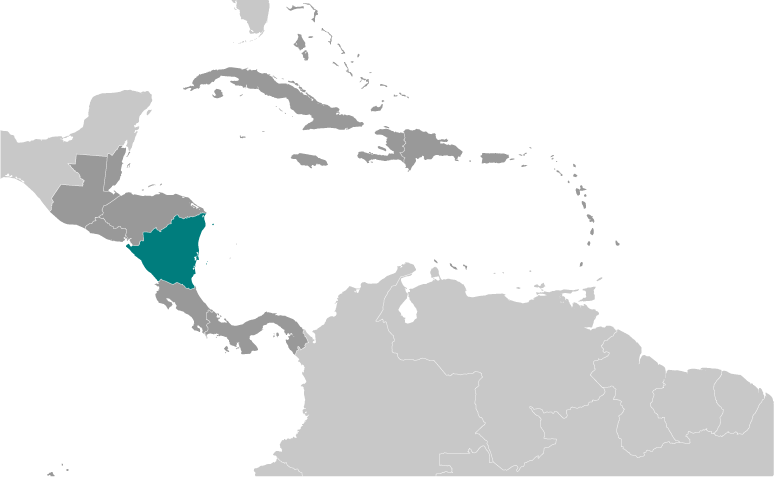
Location matters too. Nicaragua sits in the middle of Central America, bordered by Honduras and Costa Rica. This position makes it a crossroads for migration, trade, and cultural exchange. Teaching this helps students understand why people move and how countries depend on each other.
Nicaragua is also rich in cultural heritage. It has Indigenous roots, Spanish colonial history, and vibrant Caribbean communities with African and British influences. Geography lessons naturally open discussions about languages, music, food, and the importance of respecting different ways of life. Students learn that places are more than dots on a map—they are home to real people with real stories.
Environmental challenges add another layer. Nicaragua faces hurricanes, volcanic eruptions, deforestation, and earthquakes. These topics let teachers connect geography to science, economics, and civic responsibility. Students can debate solutions and see how geography affects safety, jobs, and food supply.
Finally, many K-12 classrooms include students with Nicaraguan heritage. Learning about this country can feel personal and validating. For others, it builds curiosity and empathy about places beyond their own community.
In short, Nicaragua is a fantastic teaching tool. Its volcanoes, lakes, cities, and cultures bring geography to life. When educators include Nicaragua in their lessons, they help students become more informed, caring, and globally aware citizens.
|