 Learning about Colombia's geography is important because it helps your K-12 students understand how a single country can contain extraordinary environmental and cultural diversity.
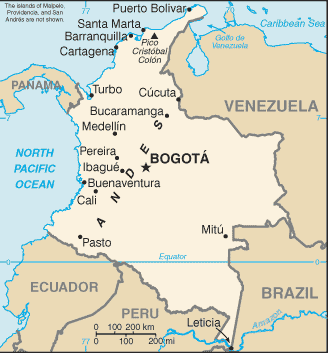
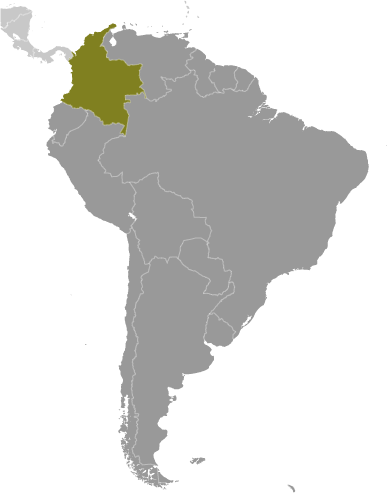
Colombia is the only South American nation with coastlines on both the Caribbean Sea and the Pacific Ocean, and it shares borders with five countries. The Andes split into three distinct mountain ranges, creating isolated valleys where unique communities and crops developed. Beyond the mountains lie the Amazon rainforest, the Orinoco plains, and Caribbean lowlands.
This variety makes Colombia an excellent case study for geographic concepts. Your students can explore how elevation produces different climates, why Colombia is one of the world's most biodiverse countries, and how coffee, flowers, and emeralds connect its landscapes to global markets. Colombia also offers lessons in urban geography, with cities like Bogotá, Medellín, and Cali sitting at very different elevations and climates.
For young learners, Colombia is engaging because of its cultural richness––cumbia, arepas, Carnaval de Barranquilla, and Indigenous and Afro-Colombian traditions––all tied to specific regions. Learning Colombia's geography builds map skills and global awareness while challenging stereotypes, helping students appreciate a nation defined by both beauty and complexity.
|



 Learning about Colombia's geography is important because it helps your K-12 students understand how a single country can contain extraordinary environmental and cultural diversity.