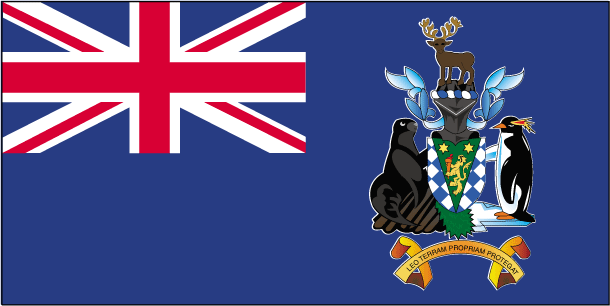
Learning about South Georgia and the South Sandwich Islands is important because they offer your K-12 students a remarkable case study in extreme geography, global conservation, and political geography. Located in the remote South Atlantic, roughly 1,000 km. east of the Falkland Islands, South Georgia is a rugged, glacier-covered island rising to Mount Paget at 2,934 meters, while the South Sandwich Islands form a chain of eleven volcanic islands, some with active volcanoes.
Studying these islands helps students grasp key geographic concepts. Their sub-Antarctic climate, with mostly westerly winds and snow, demonstrates how latitude and ocean currents shape harsh environments. The surrounding waters are globally significant for biodiversity, supporting vast populations of krill, seabirds like albatrosses, and marine mammals, making the region a living laboratory for conservation and climate change research.
The islands also teach political geography. They are a British Overseas Territory claimed by Argentina, and the 1982 conflict there makes them a compelling case study for sovereignty disputes and how geography intersects with nationalism.
For your younger learners, the islands are engaging because of their superlatives—remote, pristine, volcanic—and their role in global environmental protection. Studying them builds map skills, ecological awareness, and understanding of international relations.
|