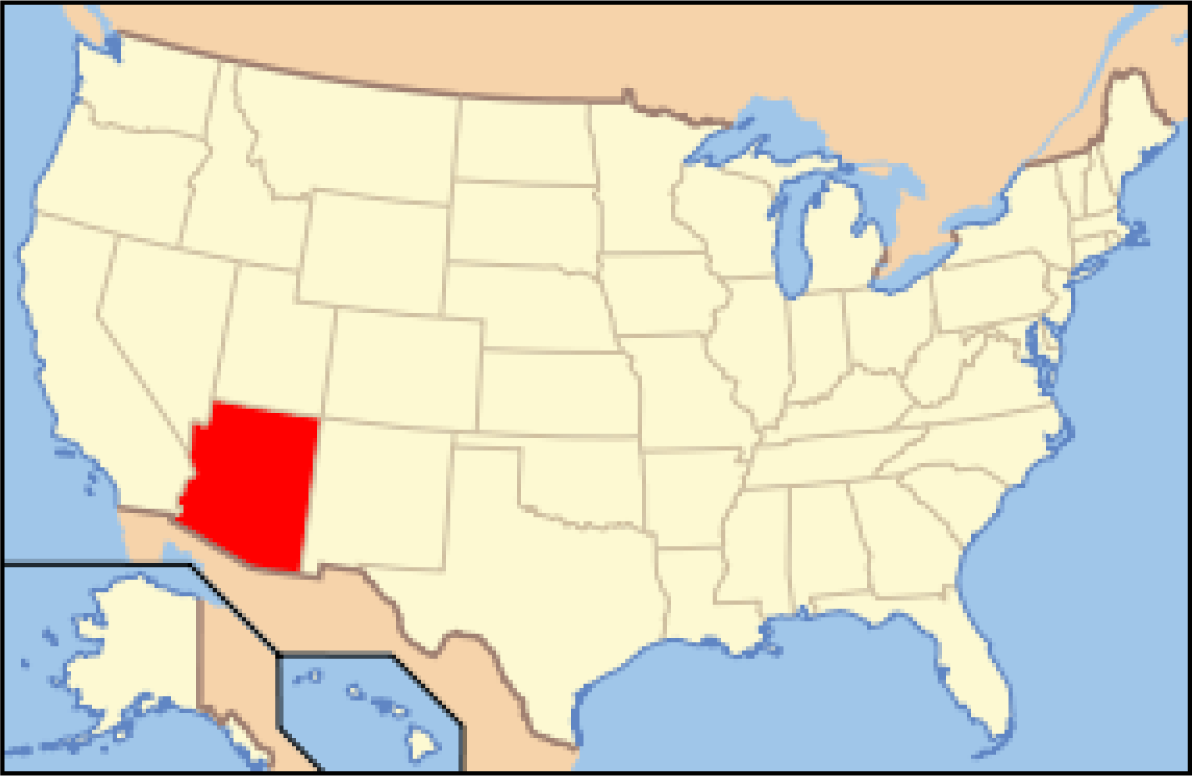
Teaching students about the geography of Arizona helps them understand how land, climate, water, and natural resources affect people's lives. Located in the southwestern United States, Arizona is known for its deserts, mountains, canyons, and sunny weather. Studying the state helps students learn how people adapt to their surroundings and how geography shapes communities.
 One of Arizona's most famous natural features is the Grand Canyon. This huge canyon was formed over millions of years as the Colorado River wore away layers of rock. Arizona also has the Sonoran Desert, forests, high plateaus, and mountain ranges. Teachers can use maps, photographs, and videos to help students identify these landforms. Students can compare Arizona's dry deserts with the forests and grasslands found in other states.
Arizona’s climate is another important topic. Many desert areas have very hot summers and mild winters. Higher mountain areas are cooler and may receive snow. These differences affect the plants and animals that live in each region. They also influence farming, tourism, housing, and outdoor activities. Students can explore why some areas receive more rain than others and how people prepare for extreme heat.
Water is especially important in Arizona. The Colorado River and other rivers help supply water to cities, farms, and communities. Because much of the state receives little rainfall, people must manage water carefully. Teachers can lead discussions about water conservation, drought, and the need to protect natural resources.
Arizona's geography has also shaped its economy and history. Mining, farming, technology, and tourism provide jobs across the state. Cities such as Phoenix and Tucson have grown in areas where people can build homes, businesses, and transportation systems. Students can use maps to study how these cities connect to other parts of Arizona and the country.
Teaching Arizona's geography builds map-reading, research, science, and history skills. Students learn to understand different environments, protect natural resources, and make thoughtful choices about the future. These lessons also help them appreciate the many landscapes and communities found throughout the United States.
|