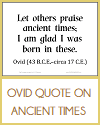
Ovid (43 B.C.E.-17 C.E.) was a Roman poet best known for Metamorphoses, a collection of mythological tales about transformation, and for Ars Amatoria, a witty guide to love that contributed to his exile by Emperor Augustus. His writing blends humor, tragedy, and vivid storytelling, and his versions of myths—such as Narcissus, Icarus, and Pygmalion—have shaped Western art and literature for centuries.
It is important for your K-12 students to learn about Ovid because he is a gateway to classical mythology and to understanding how stories evolve across time. His tales appear in Shakespeare, Dante, and modern novels, films, and poetry, so knowing Ovid helps students recognize cultural references and trace ideas across disciplines. His playful use of language also offers an engaging entry point into poetry, figurative language, and narrative structure.
Ovid's life raises meaningful questions about artistic freedom and political power. His exile for writing verse the emperor disliked invites students to consider how societies treat speech and creativity. Because his myths explore love, pride, transformation, and loss, they also support social-emotional learning.
Studying Ovid helps your K-12 students see that ancient literature is not a relic but a living influence on the stories they encounter today.
|