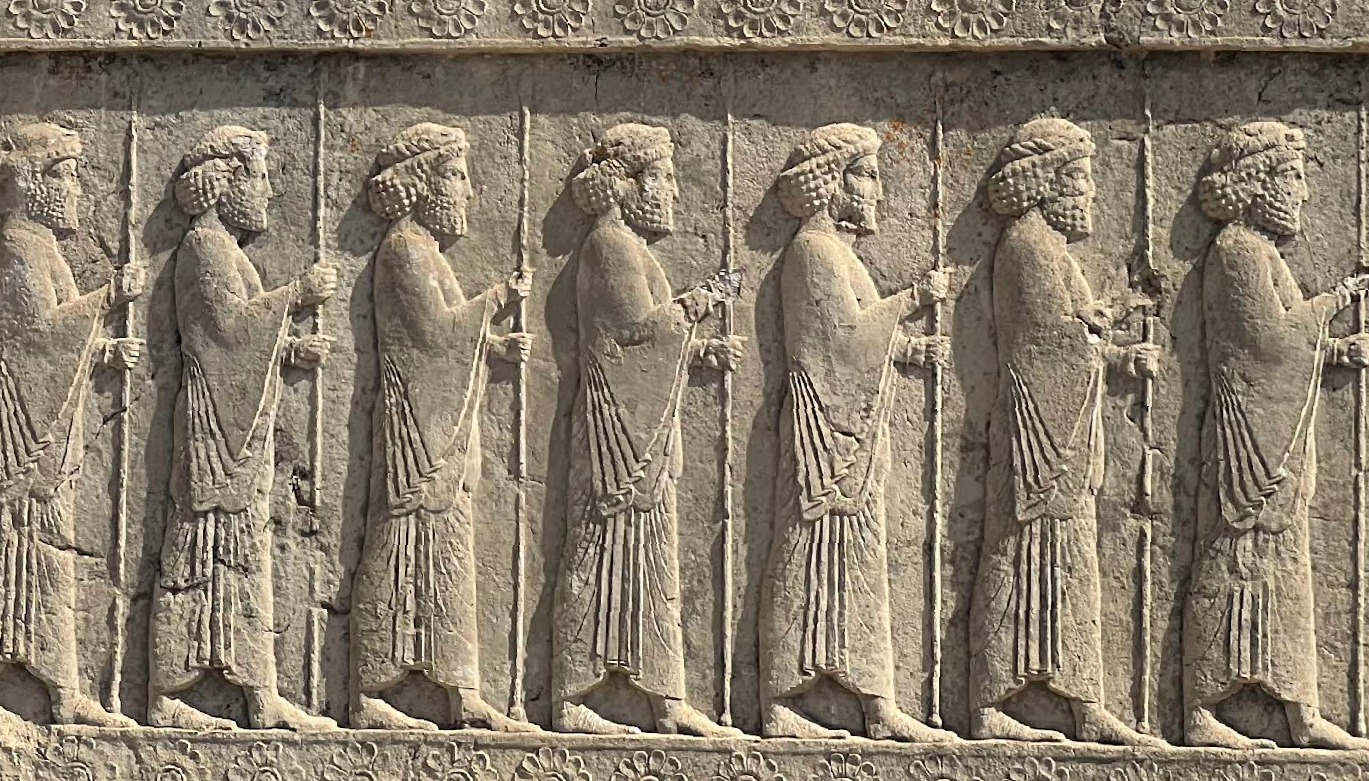
The ancient Persian relief figures at the Apadana Palace in Persepolis, Iran, are masterpieces of Achaemenid art and imperial propaganda. Dating to the reign of Darius I (522-486 B.C.E.) and his son Xerxes, these stone carvings adorn the monumental stairways leading to the grand audience hall. Their primary subject is the procession of delegates from twenty-three subject nations bringing tribute to the king.
Each ethnic delegation—from Medes, Elamites, Babylonians, Egyptians, and beyond—is rendered with meticulous ethnographic detail, showing distinct clothing, hairstyles, and gifts (capes, rams, vessels, ivory). The figures move in serene, rhythmic lines, their postures embodying order and harmony, not subjugation. Notably, delegates often hold hands or guide animals, symbolizing peaceful cooperation under Persian rule.
Above the processions, the famous "lion-and-bull" relief—showing a lion devouring a bull—is often interpreted as representing Nowruz (the Persian New Year), the triumph of spring over winter, or the cosmic balance of power. The reliefs employ low relief carving with precise outlines and subtle depth, achieving dignity without naturalistic drama.
These figures are not merely decorative; they form a visual constitution of the Achaemenid ideal: a diverse empire united through respect, not force. Today, though fragmented, they remain a powerful testament to Persian tolerance, organization, and artistic sophistication.
Extension activities for students: Have students compare the art and architecture of this and other sites, including those studied in previous World History units. What themes and motifs are universal? Which culture(s) had more realistic art? Ideally, high school students should be able to distinguish ancient Persian art from that of ancient Egypt, ancient Greece, etc.
|