
| The Dark Ages (2007) Film Educator Guide |
|---|
| www.studenthandouts.com ↣ World History ↣ Barbarian Migrations ↣ Barbarian Migrations Books and Films |
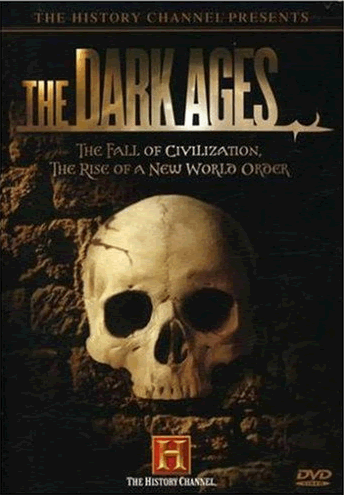 Length: 90 minutes (1 hour, 30 minutes)
Age appropriateness: History Channel's "The Dark Ages" is officially rated "TV-PG" in the United States. There is no sex, but there is plenty of violence (though no gore is shown). I recommend this DVD for students in grades seven and up. Creators and stars: Andrius Brazas, Bonnie Effros, Brett Whalen, Christopher Cassel, Diane Wai, Jennifer P. Honn, Jim Masschaele, Kelly DeVries, Michael Kulikowski, Philip Daileader, R.J. Allison, Thomas Martin, Tim Metzger Accuracy: "The Dark Ages" is generally accurate, and safe to show in a classroom. The worst crime of this documentary is "lying by omission." This is not surprising considering that over 700 years of history are crammed into 90 minutes. Otherwise, the interviewees are experts who make the story come alive. The production and reenactments demonstrate the way that A&E smartened up its original historical programming following its low-budget documentaries of the 1990s. Review: "The Dark Ages" lies by omission in the sense that things are said creatively in a way that causes the novice viewer to interpret them in a certain way, even though this interpretation is inaccurate. For example, the first few minutes of the documentary feature a barrage of misleading information. Here are some examples to explain: Rome was attacked in 410 for the first time in 800 years. Actually, the siege by the Visigoths began two years earlier, in 408 C.E. The 408 date is mentioned later in the film, but this does not do much to erase the wrongful idea that the Romans were shocked to see Visigoths pounding on the city gates in 410. The Visigoths were "heathens." The Visigoths may have been seen as barbarians (though they were in truth heavily Romanized by this time), but they were definitely not heathens in the pagan sense of the term; the Visigoths were practicing Christians. And this is not just a case of a poorly chosen word, but points to the fact that the intricate, long-standing interactions and agreements between Romans and barbarians are largely overlooked in this sweeping narrative. The Roman empire fell with the Visigoth attack of 410 C.E. The traditional date for the fall of the Western Roman Empire is 476 C.E., when Emperor Romulus Augustus was deposed by the barbarian Odoacer. It isn't that the narration states explicitly that Rome fell for good in 410 C.E. But no information on what happened in 476 C.E. is given, which can easily lead viewers to think that no emperors ruled Rome after 410. There is also virtually no mention of women in this film outside of the Empress Theodora. Queens like Clotilde are not mentioned, even though significant screen time is given to her husband, Clovis I, and his conversion to Christianity. Despite these foibles, this documentary really isn't too bad. It crams a lot of important names and dates into a fun-to-watch 90 minutes of film. Overall, I recommend it as a "hook" to give students some background information on the early Middle Ages and to get them interested in the topic. For most students, a high school World History course is the first place where they will ever hear the names of historical figures like Charlemagne, Alaric, and Charles Martel. Since it is proven that repetition helps to increase retention, this is a great video to show in class before studying this period in European history. Review and discussion questions:
|
 |  |  |  |  |  |
| www.studenthandouts.com ↣ World History ↣ Barbarian Migrations ↣ Barbarian Migrations Books and Films |