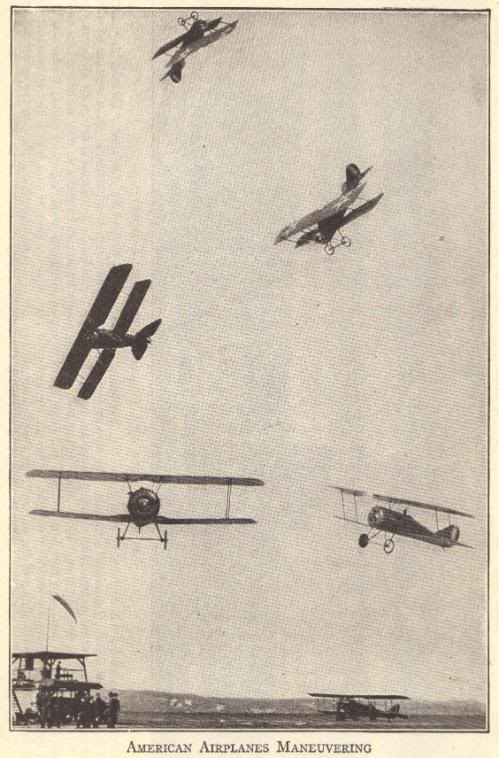
World War I. American airplanes maneuvering.
Airplanes played an important and surprising role in World War I, even though they were brand new inventions. When the war began in 1914, planes were fragile and slow, made of wood and fabric. At first, they were used mainly for scouting enemy positions and photographing battlefields. Pilots would fly over trenches to spot where enemy troops were gathered, which helped commanders plan attacks.
As the war went on, planes improved quickly. Engineers built faster, stronger aircraft with better engines. Both sides began arming planes with machine guns, leading to dogfights, or aerial battles between fighter planes. Famous pilots like the Red Baron became heroes. Planes also dropped small bombs and strafed enemy lines, though bombing was not yet very accurate.
By the end of the war, airplanes had proven they could change how wars were fought. They gathered intelligence, protected troops, and attacked targets from above. Countries realized they needed strong air forces, and aviation technology advanced rapidly because of wartime needs. After the war, many pilots and planes helped start the first passenger airlines.
For K-12 students, learning about airplanes in World War I shows how new technology can transform conflict and society. It connects history, science, and engineering, and helps students understand how a war fought in trenches also took to the skies.
|