
| Film Reviews and Guides for Educators |
|---|
| www.studenthandouts.com ↣ Film Reviews and Guides for Educators |
As teachers, we know that watching a variety of documentary films offers significant educational benefits to K-12 students. Documentaries bring real-world events, cultures, and concepts to life, making our kids' learning experience more engaging and memorable. This is why we have created numerous doc guides.
 By presenting information through visuals, narration, and personal stories, documentaries help our students better understand complex topics across the curriculum—in history, science, geography, social studies, and more.
They also enhance critical thinking by encouraging our students to analyze sources, question conflicting perspectives, and compare disparate viewpoints. Exposure to diverse subjects and global issues promotes cultural awareness and empathy. For our younger students, documentaries can spark curiosity and introduce new ideas, while our older students gain deeper insight into historical events, scientific discoveries, or current affairs. Additionally, documentary films support various learning styles and can reinforce reading and classroom instruction. Docs are a valuable tool for enriching education and broadening our students' understanding of the world! Below is a large sampling of our documentary reviews and guides. You will find them and more within individual units of course content. |
 |  |  |  |  | ||||||
| Hard Times: Lost on Long Island (2012) | Inventing Our Life: The Kibbutz Experiment (2011) | Bel Borba Aqui (2012) | Plastic Planet (2009) | Mumia (2011) |
 |  |  |  |  | ||||||
| Rising from Ashes (2013) | Pink Ribbons, Inc. (2011) | Wagner and Me (2010) | Photographic Memory (2011) | The Age of Stupid (2009) |
 | 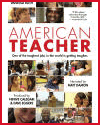 | 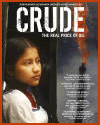 |  |  | ||||||
| Sacco and Vanzetti (2006) | American Teacher (2011) | Crude: The Real Price of Oil (2009) | Battle for Dien Bien Phu (1986) | Bones of Turkana (2012) |
 |  |  |  |  | ||||||
| Surviving Progress (2011) | A Girl and a Gun (2012) | Secrets of Stonehenge (2010) | The Jewish People: A Story of Survival (2008) | Ferlinghetti: A Rebirth of Wonder (2009) |
 |  |  |  |  | ||||||
| Everybody Knows...Elizabeth Murray (2016) | Iraq: The Cradle of Civilization (1991) | Tapped (2009) | A Fierce Green Fire (2012) | Censored Voices (2015) |
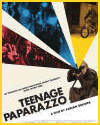 |  | 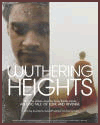 |  |  | ||||||
| Teenage Paparazzo (2010) | Sext Up Kids (2012) | Wuthering Heights (2011) Movie Guide for Educators | Payback (2012) | 56 and Up (2012) |
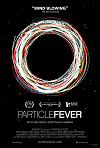 |  | |||||||||
| Particle Fever (2014) | Chimpanzee (2012) |
| Teaching Tip: If you find these materials too vast for any teacher to cover in the course of a single school year, our answer is: Get students and parents involved in the learning process with: Family Movie Night! Here's how it works: As we begin a teaching unit or textbook chapter, we find movies from our lists that we (a) don't have time to show in class but (b) believe would benefit our students' understanding of the subject matter. Using our classroom web pages or blogs, under a "Family Movie Night" subject heading, we link directly to these books, films, and documentaries (individual review web pages). Our families can then click on a link, read a brief review, and select a film. |
| www.studenthandouts.com ↣ Film Reviews and Guides for Educators |