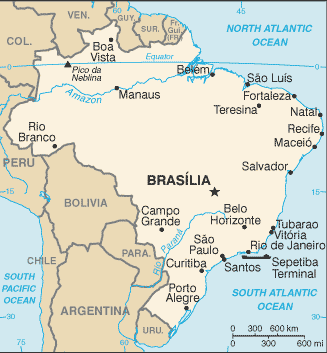
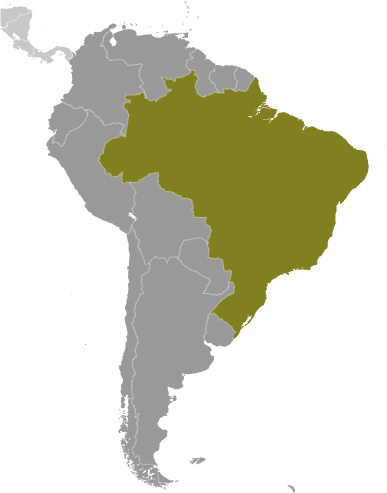
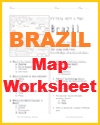
Learning about Brazil's geography is important because it helps your K-12 students understand one of the world's largest and most influential countries. Brazil covers nearly half of South America and is home to the Amazon rainforest, the planet's most biodiverse ecosystem and a critical regulator of global climate. The Amazon River carries more water than any other river on Earth, while the Pantanal wetlands, the Atlantic Forest, and the Cerrado savanna add further ecological variety. Studying these regions shows your students how interconnected environmental systems are and why conservation matters worldwide.
Brazil's geography also reveals sharp human contrasts. Most Brazilians live in crowded coastal cities like São Paulo and Rio de Janeiro, while vast interior regions remain sparsely populated. The country is a leading producer of coffee, soybeans, beef, and iron ore, linking its landscapes to global supply chains and deforestation debates. Its varied climate zones, from tropical north to temperate south, shape agriculture and settlement patterns.
For your young learners, Brazil is engaging because of its cultural richness—samba, Carnival, football, and Indigenous traditions—all rooted in specific places. Learning Brazil's geography builds map skills, environmental awareness, and cultural empathy, helping your students see how a single nation can contain enormous diversity and global significance.
|