


| Napoléon Bonaparte (1769-1821) Educational Resources |
|---|
| www.studenthandouts.com ↣ Historical Figures ↣ Historical Figures with "B" Names ↣ Napoléon Bonaparte |
|
Why is Napoléon such an important historical figure for your students to learn about?
Napoléon Bonaparte, born on August 15, 1769, in Corsica, was one of history's most influential military leaders and statesmen. Rising to prominence during the French Revolution, he rapidly ascended through the military ranks due to his exceptional strategic acumen and leadership abilities. In 1799, Napoléon staged a coup d'état, overthrowing the French Directory and establishing himself as the First Consul of France. By 1804, he crowned himself Emperor, marking the beginning of the Napoleonic Era. 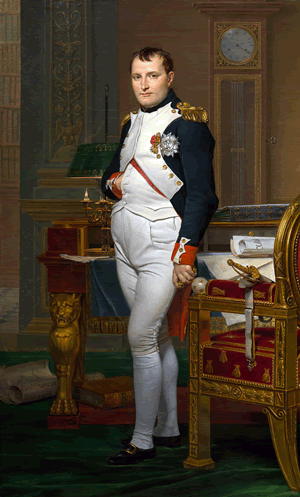 Napoléon's reign is characterized by a series of military campaigns, collectively known as the Napoleonic Wars, which expanded French influence across much of Europe. His innovative tactics and battlefield prowess led to numerous victories against various coalitions of European powers. Notable battles include Austerlitz (1805), where he decisively defeated the Austro-Russian forces, and Wagram (1809), which solidified his control over Austria.
Beyond his military achievements, Napoléon implemented significant administrative and legal reforms. The Napoleonic Code, a comprehensive legal framework, has had a lasting impact on civil law jurisdictions worldwide. He also reformed the educational system, established the Bank of France, and centralized the administrative structure of the French government. However, Napoléon's ambition ultimately led to his downfall. The disastrous invasion of Russia in 1812 severely weakened his army, and subsequent defeats by a coalition of European powers culminated in his abdication in 1814. He was exiled to the island of Elba but escaped and briefly regained power during the Hundred Days before his final defeat at the Battle of Waterloo in 1815. Napoléon was then exiled to the remote island of Saint Helena, where he died on May 5, 1821. Napoléon Bonaparte's legacy is complex; he is remembered both as a brilliant military strategist and a reformer who reshaped Europe, as well as a conqueror whose relentless ambition led to widespread conflict and suffering. His life and career continue to be studied for their profound impact on European history. 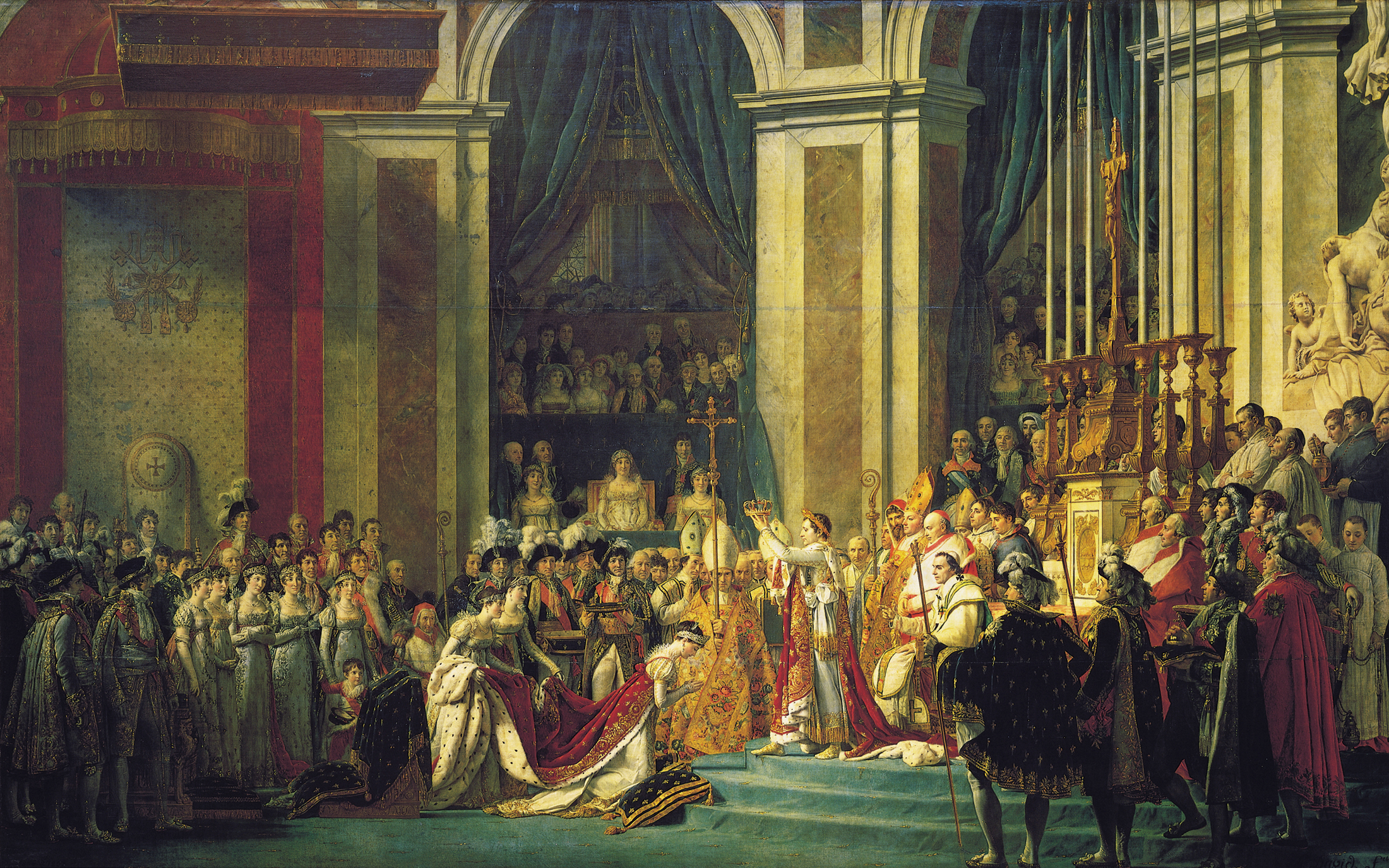 Sacre de l'empereur Napoléon Ier et couronnement de l'impératrice Joséphine dans la cathédrale Notre-Dame de Paris, le 2 décembre 1804, by Jacques-Louis David (dated 1805-1808).
Napoléon Bonaparte (lived 1769-1821) ruled as the French emperor from May 18, 1804 until April 11, 1814, and again from March 20, 1815 until June 22, 1815. His coronation took place on December 2, 1804. His wife at this time was Josephine de Beauharnais. 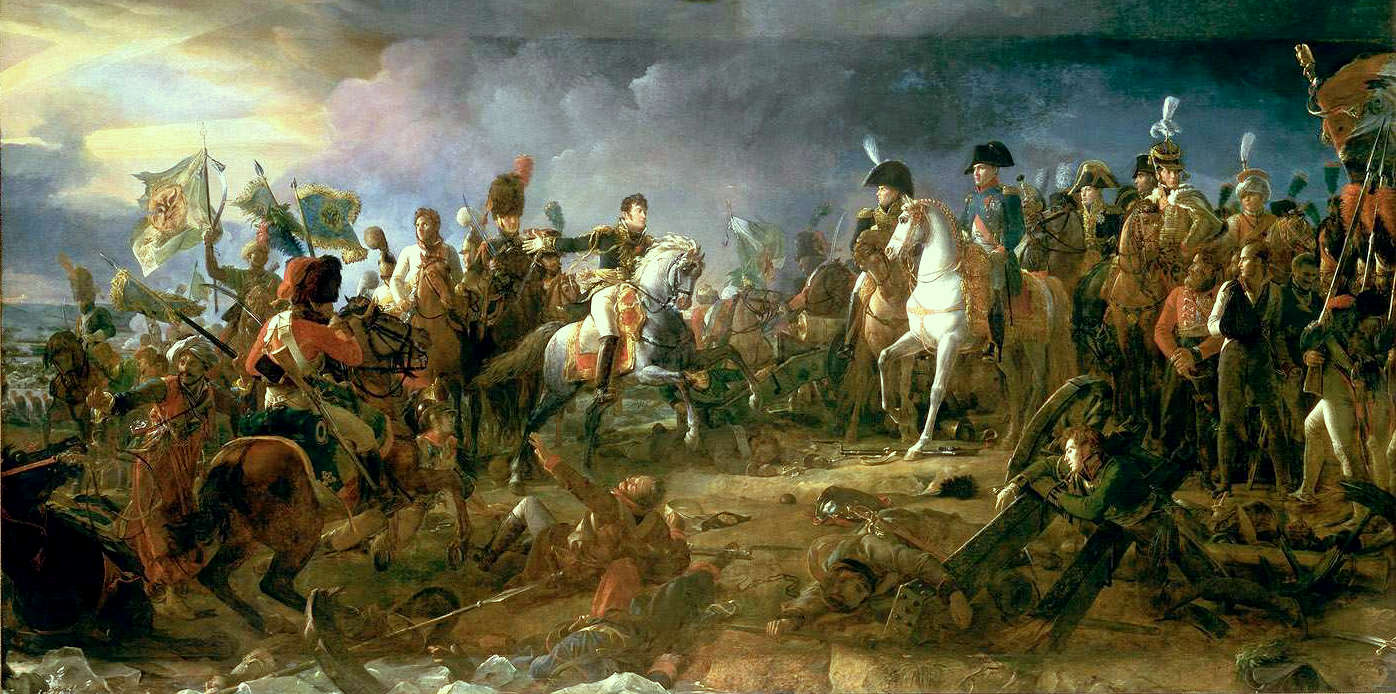 The Battle of Austerlitz by Francois Pascal Simon (1810). This painting hangs at Versailles.
The Battle of Austerlitz was fought on December 2, 1805 (11 Frimaire An XIV FRC). It is also known as the Battle of the Three Emperors, with Napoléon's Grande Armée victorious over Alexander I of Russia (who led Russian and Austrian troops) and Francis II of the Holy Roman Empire. It is considered to be Bonaparte's greatest military victory. The battle took place near the town of Austerlitz, then part of the Austrian Empire (modern-day Slavkov u Brna in the Czech Republic). 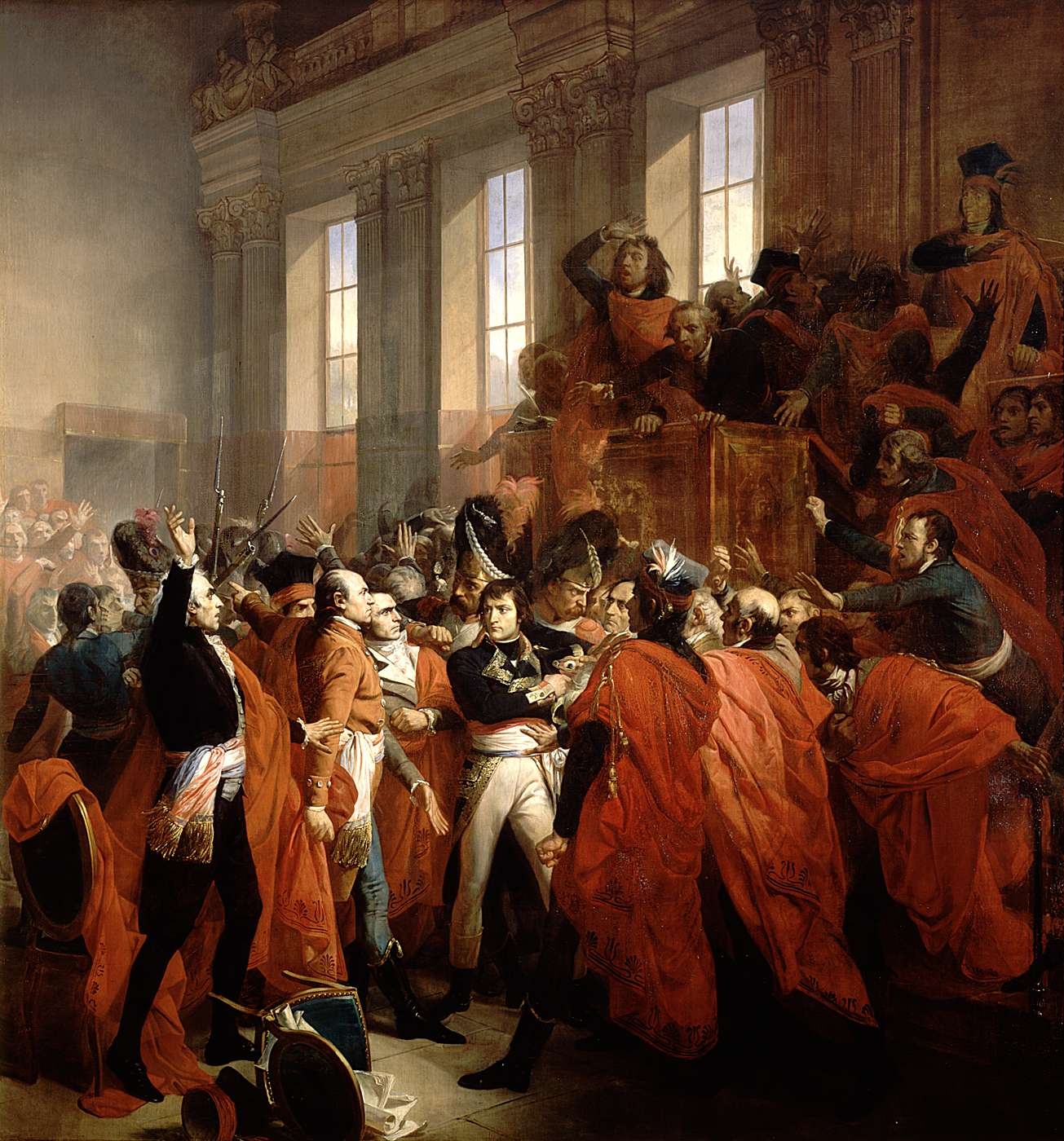 Napoléon Bonaparte in the coup d'état of 18 Brumaire in Saint-Cloud by Francois Bouchot (1840).
The Coup of 18 Brumaire took place in France on November 9, 1799. Napoléon Bonaparte and his supporters overthrew the French government, called the Directory. They replaced it with a new system led by three consuls, with Napoléon as the most powerful. This event ended the French Revolution and began Napoléon's rise to absolute power. 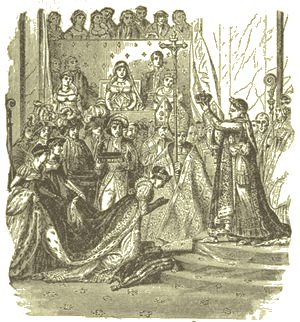 Coronation of Empress Josephine by Napoléon I.
Napoléon gained a reputation as a successful military commander under the French revolutionary government. An ambitious man, Napoléon seized power in France through a coup d'état in 1799. This coup d'état officially marks the end of the ten-year period (1789-1799) known as the French Revolution, and begins the Napoléonic Era (1799-1815). The European peasants and bourgeoisie conquered by Napoléon may not have enjoyed being conquered, but they did like the more liberal laws that he enacted. Once given their rights, these people were loathe to relinquish them. 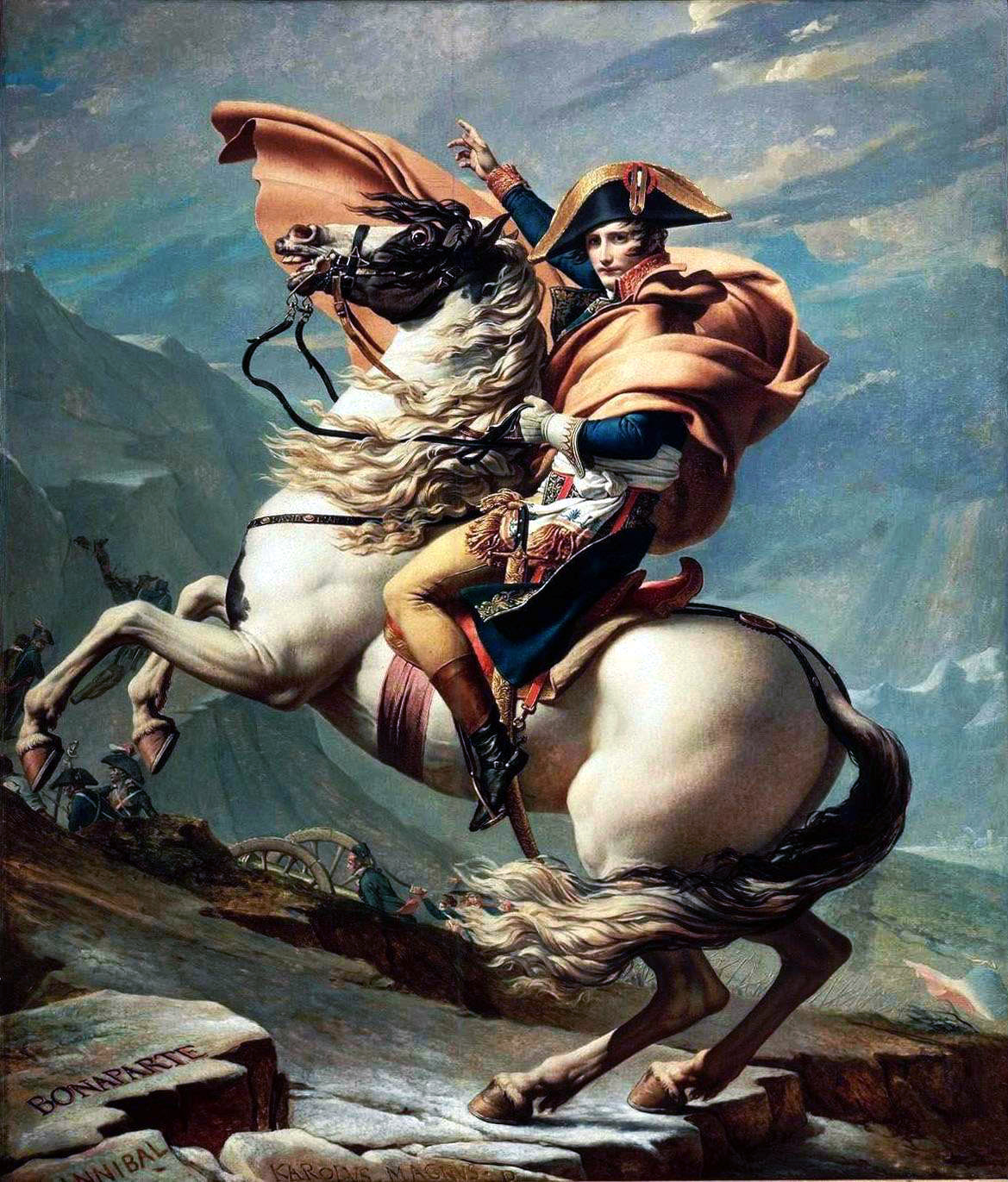 Napoléon Crossing the Alps by Jacques-Louis David (1801).
This painting is located at the Musee national du château de Malmaison - R.M.N., in Rueil-Malmaison, France. Jacques-Louis David painted Napoleon Crossing the Alps in 1801 to celebrate Napoleon's 1800 military campaign into Italy. It shows Napoleon on a rearing horse, pointing forward, portraying him as heroic and powerful. In reality, he crossed on a mule, so the painting is propaganda that exaggerates his glory. 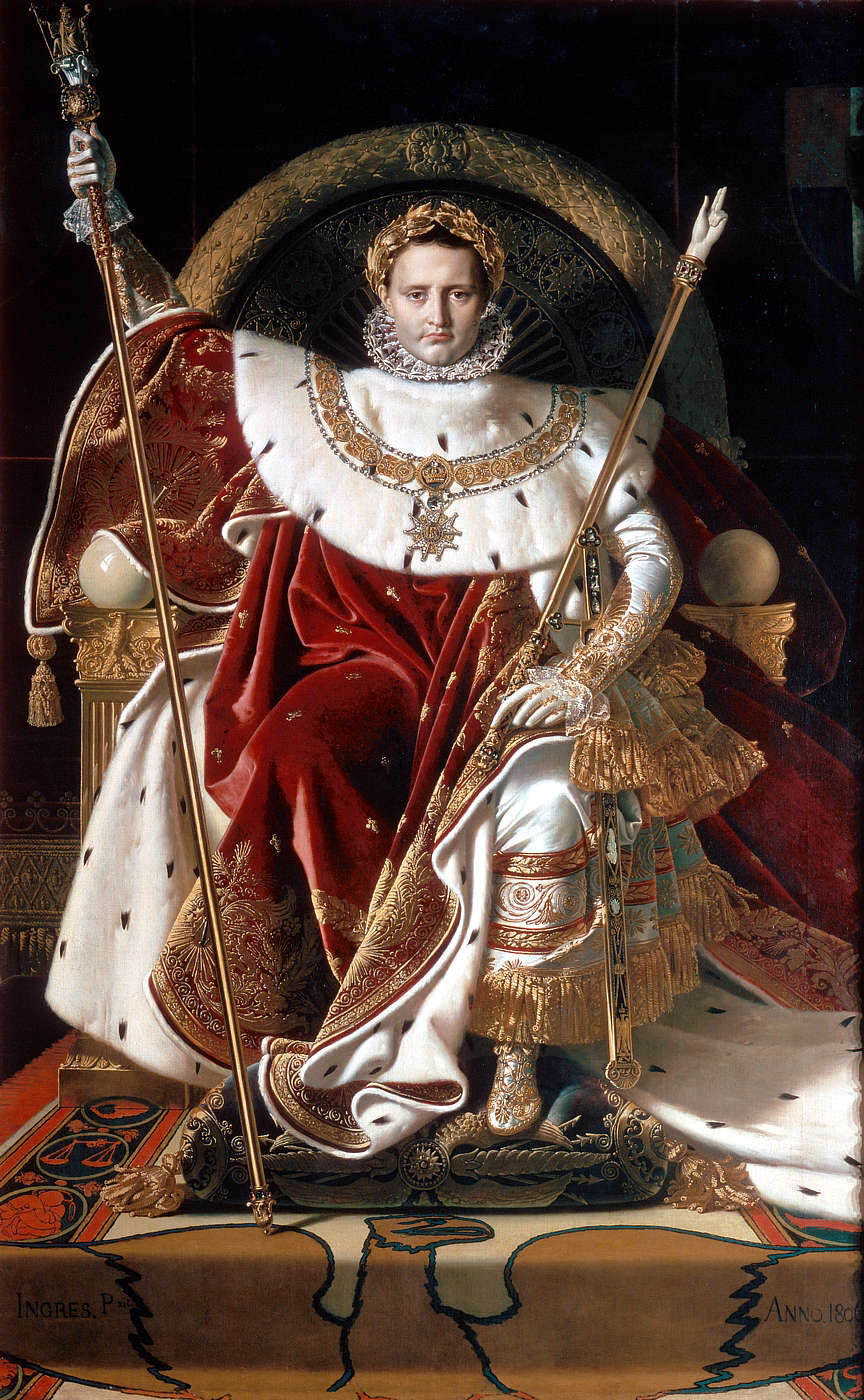 Napoléon on His Imperial Throne by Jean Auguste Dominique Ingres (1806).
This painting is located at the Musée de l'Armée. Jean-Auguste-Dominique Ingres painted Napoleon on His Imperial Throne in 1806. It shows Napoleon in lavish coronation robes, holding symbols of power like the scepter and sword. The painting portrays him as a majestic, almost godlike ruler, blending Byzantine and imperial imagery to legitimize his new empire. |
 |  |  | 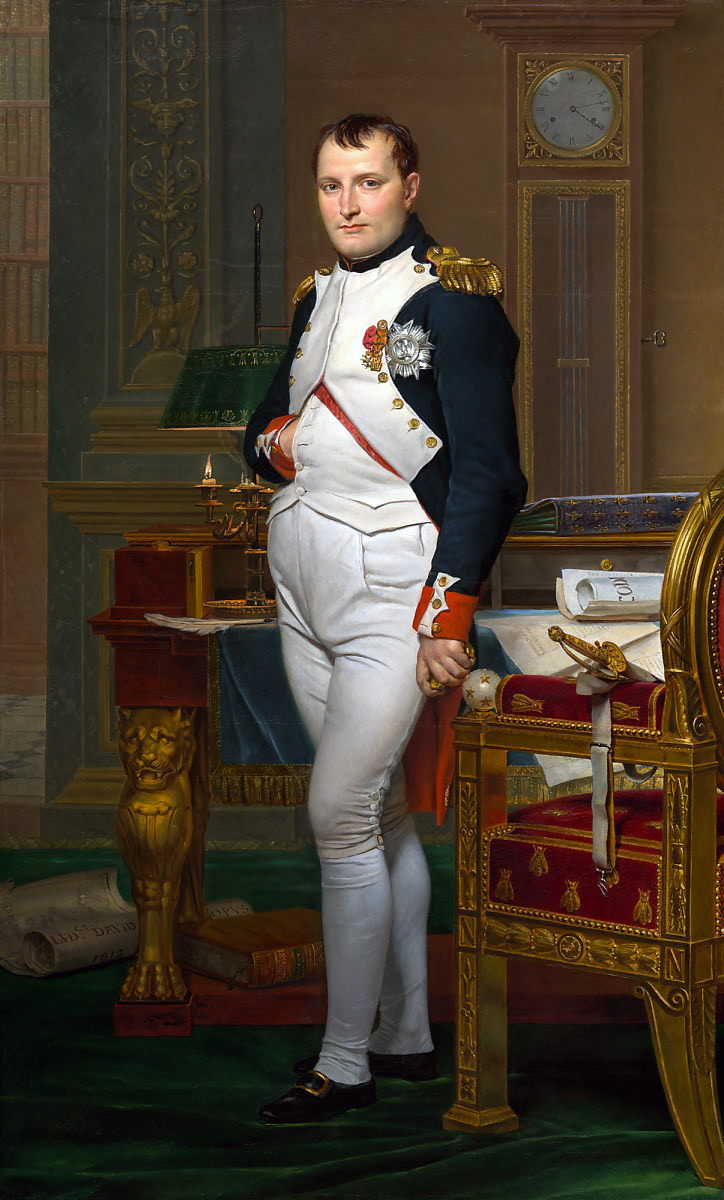 |  | ||||||
| Battle of Wagram, 1809 | Napoléon in Egypt, 1798 | Napoléon I Coloring Pages | Napoléon in His Study by Jacques-Louis David, 1812 | Waterloo Battle Map |
 | 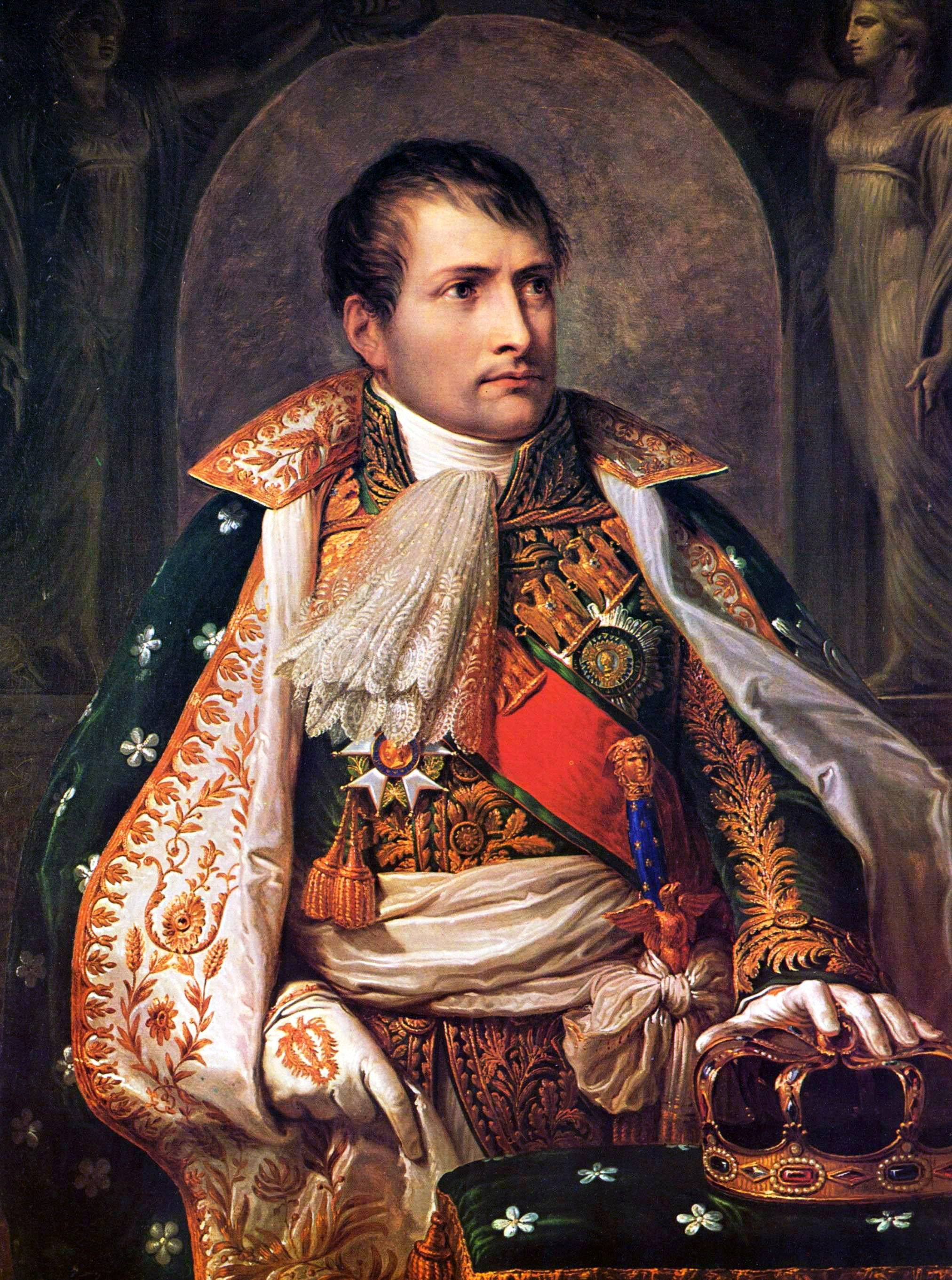 |  |  | |||||||
| Arc de Triomphe, Paris, France | Emperor Napoléon I by Andrea Appiani, 1805 | "Never Interfere with the Enemy..." Printable Napoléon Quote | Napoléon Bonaparte on the Bridge at Arcole |
| Napoléonic Era Books and Films | Napoléonic Era Outlines and PowerPoints |
| Napoléonic Era Maps and Pictures | Napoléonic Era Educational Games |
| Napoléonic Era Miscellany | Napoléonic Era Worksheets |
| www.studenthandouts.com ↣ Historical Figures ↣ Historical Figures with "B" Names ↣ Napoléon Bonaparte |





