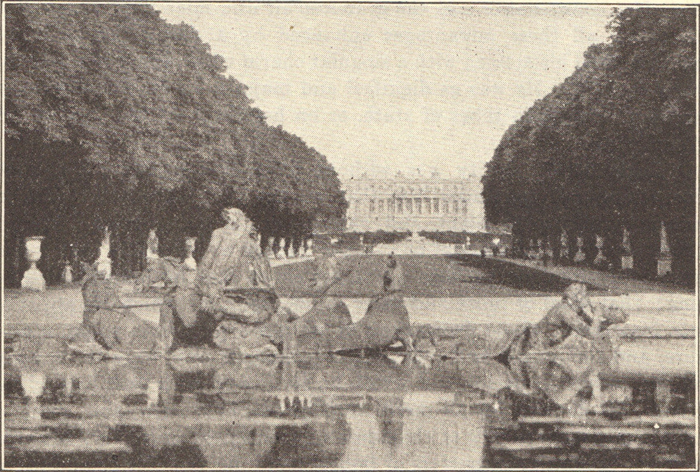
Palace of Versailles as Seen from the Gardens. This side of the palace is almost 2000 feet long. The portion seen in this picture contains the Gallery of Mirrors, so named from the seventeen large mirrors which occupy the side of the room opposite the round arched windows on the second floor. It was in this great hall that the Treaty of 1919 with Germany, ending World War I, was signed by delegates representing nearly nine-tenths of the population of the globe.
Click here to enlarge.
Teaching about the Palace of Versailles is greatly enriching because it helps K-12 students connect geography, history, and power in one spectacular place. Versailles sits about 12 miles southwest of Paris, surrounded by forests and gardens. Its location let French kings escape the crowded capital while staying close enough to govern. The palace began as a hunting lodge for King Louis XIII and was transformed by Louis XIV into a massive symbol of absolute monarchy. Its Hall of Mirrors, royal apartments, and endless gardens show how architecture can display wealth and control.
Students can explore how the palace's design reflects geography, from the flat landscape that allowed vast gardens to the canals that supplied water. They can also learn how Versailles became the center of French government and culture, hosting nobles and shaping fashion and art. For young learners, Versailles is memorable because of its golden gates, fountains, and Hall of Mirrors. Studying it builds map skills, cultural awareness, and understanding of how geography and history shape each other.
|