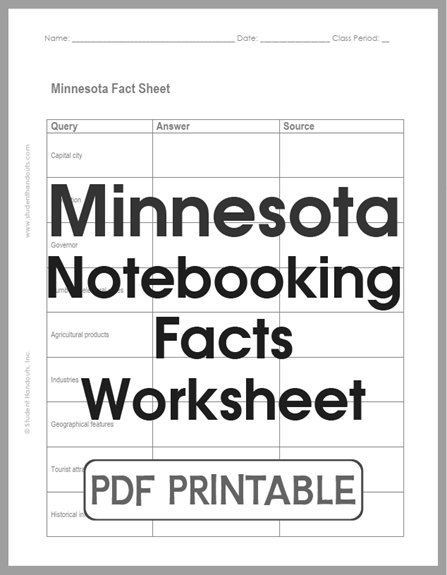
Click here to print. Answers will vary.
Minnesota is a state in the Upper Midwest known for its lakes, forests, rivers, and wide-open plains. Its landscape includes gently rolling hills, fertile farmland, wetlands, and rocky areas in the northeast. Lake Superior forms part of the state's northeastern border, while the Mississippi River begins at Lake Itasca in north-central Minnesota. The state's many lakes and waterways support wildlife, recreation, fishing, and tourism. Minnesota experiences cold, snowy winters and warm summers, creating distinct seasonal changes.
Minnesota has a diverse economy shaped by its natural resources and location. Agriculture is an important industry, with farmers growing corn, soybeans, wheat, and sugar beets. Dairy farming and livestock production also contribute to the economy. The state has a long history of mining, especially iron ore in the northeastern Iron Range. Timber and paper production developed because of its extensive forests. Today, Minneapolis and Saint Paul form a major business center with industries that include health care, manufacturing, finance, and technology. Transportation routes along rivers, railways, and highways help move products throughout the region.
Minnesota's history began long before European settlement. Dakota and Ojibwe peoples lived throughout the region, building communities and maintaining important cultural connections to the land and water. French explorers and fur traders arrived during the seventeenth century. Minnesota became a U.S. territory in 1849 and joined the Union as the thirty-second state in 1858. During the nineteenth century, farming, logging, and mining attracted new settlers and helped towns grow. Immigration from Europe also shaped the state's communities and traditions.
Today, Minnesota combines natural beauty, strong industries, and diverse cultural traditions. Its geography and history continue to influence how people live, work, and connect with the environment.
|