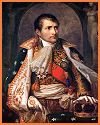
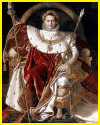
Napoléon Bonaparte, born on August 15, 1769, in Corsica, was one of history's most influential military leaders and statesmen. Rising to prominence during the French Revolution, he rapidly ascended through the military ranks due to his exceptional strategic acumen and leadership abilities. In 1799, Napoléon staged a coup d'état, overthrowing the French Directory and establishing himself as the First Consul of France. By 1804, he crowned himself Emperor, marking the beginning of the Napoleonic Era.
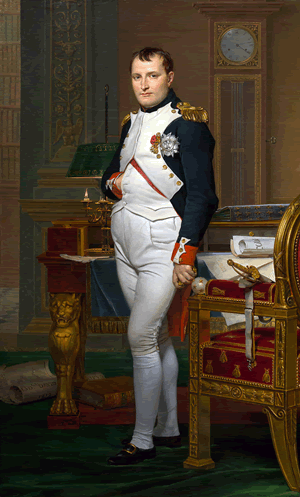 Napoléon's reign is characterized by a series of military campaigns, collectively known as the Napoleonic Wars, which expanded French influence across much of Europe. His innovative tactics and battlefield prowess led to numerous victories against various coalitions of European powers. Notable battles include Austerlitz (1805), where he decisively defeated the Austro-Russian forces, and Wagram (1809), which solidified his control over Austria.
Beyond his military achievements, Napoléon implemented significant administrative and legal reforms. The Napoleonic Code, a comprehensive legal framework, has had a lasting impact on civil law jurisdictions worldwide. He also reformed the educational system, established the Bank of France, and centralized the administrative structure of the French government.
However, Napoléon's ambition ultimately led to his downfall. The disastrous invasion of Russia in 1812 severely weakened his army, and subsequent defeats by a coalition of European powers culminated in his abdication in 1814. He was exiled to the island of Elba but escaped and briefly regained power during the Hundred Days before his final defeat at the Battle of Waterloo in 1815. Napoléon was then exiled to the remote island of Saint Helena, where he died on May 5, 1821.
Napoléon Bonaparte's legacy is complex; he is remembered both as a brilliant military strategist and a reformer who reshaped Europe, as well as a conqueror whose relentless ambition led to widespread conflict and suffering. His life and career continue to be studied for their profound impact on European history.
|


















































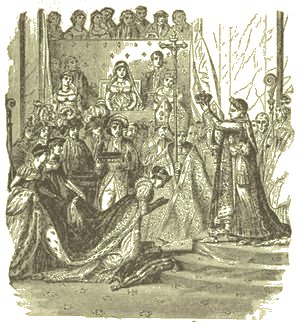 Coronation of Empress Josephine by Napoléon I.