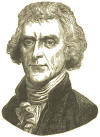
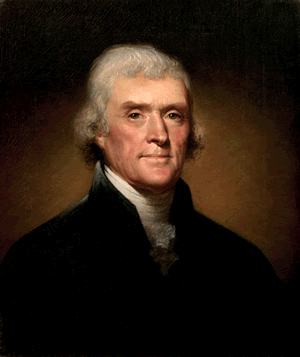
 Thomas Jefferson (1743-1826) was a central figure in early American history, known for his roles as a Founding Father, diplomat, and the third president of the United States. Born in Virginia, Jefferson was a highly educated and curious individual, studying law, science, and philosophy. He is most famous for drafting the Declaration of Independence in 1776, a document that eloquently articulated the colonies' desire for freedom and established principles of individual rights that continue to influence democratic societies today.
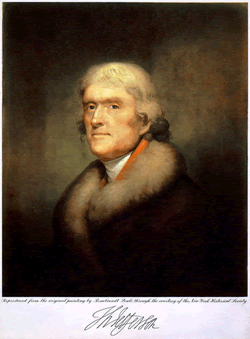 Jefferson's presidency (1801-1809) included significant achievements, such as the Louisiana Purchase in 1803, which doubled the size of the United States, and the Lewis and Clark expedition, which explored the western territories. He was a proponent of limited government, states' rights, and an agrarian vision of America, believing that a nation of independent farmers was the backbone of democracy.
Despite his contributions, Jefferson's legacy is complex. He was a slave owner, which stands in stark contrast to his advocacy for liberty and equality, highlighting the contradictions of the early republic. Beyond politics, Jefferson was a polymath, interested in architecture, science, and education––founding the University of Virginia in 1819.
Jefferson's ideas and achievements left an enduring imprint on the United States, shaping its political philosophy, territorial growth, and educational institutions, while also presenting challenges in reconciling ideals of freedom with the realities of his personal life.
|



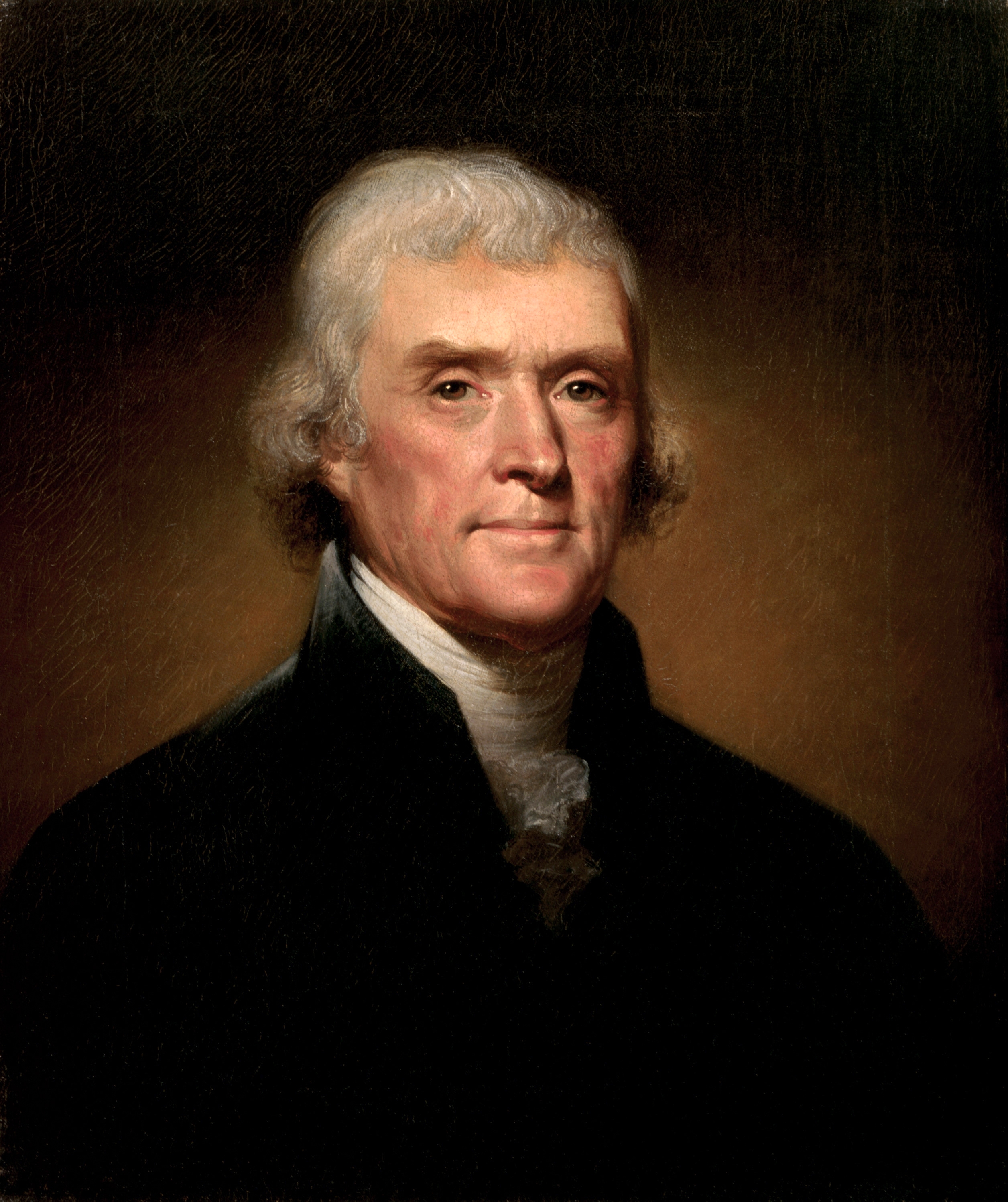 Thomas Jefferson (1743-1826) was a central figure in early American history, known for his roles as a Founding Father, diplomat, and the third president of the United States. Born in Virginia, Jefferson was a highly educated and curious individual, studying law, science, and philosophy. He is most famous for drafting the Declaration of Independence in 1776, a document that eloquently articulated the colonies' desire for freedom and established principles of individual rights that continue to influence democratic societies today.
 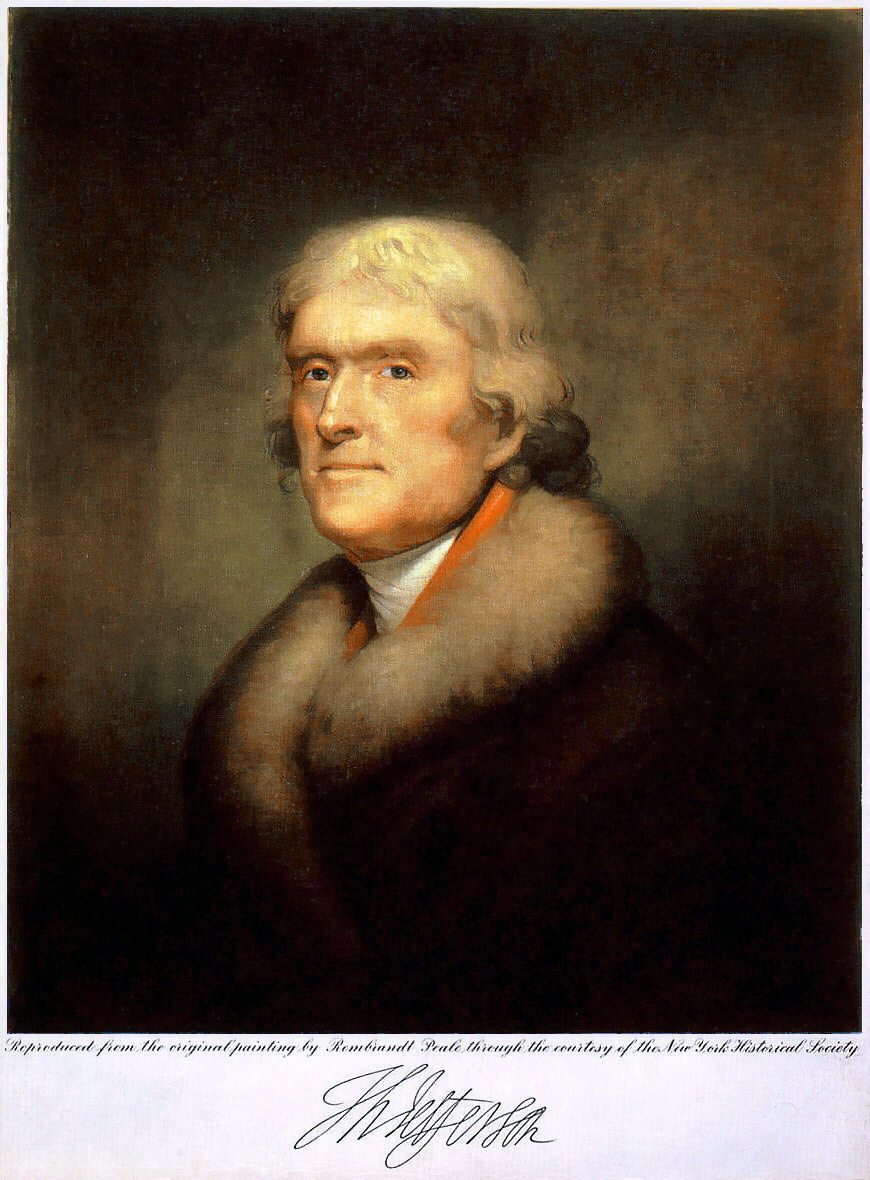 Jefferson's presidency (1801-1809) included significant achievements, such as the Louisiana Purchase in 1803, which doubled the size of the United States, and the Lewis and Clark expedition, which explored the western territories. He was a proponent of limited government, states' rights, and an agrarian vision of America, believing that a nation of independent farmers was the backbone of democracy.